
 By fuyuhuaxue@iumrs.com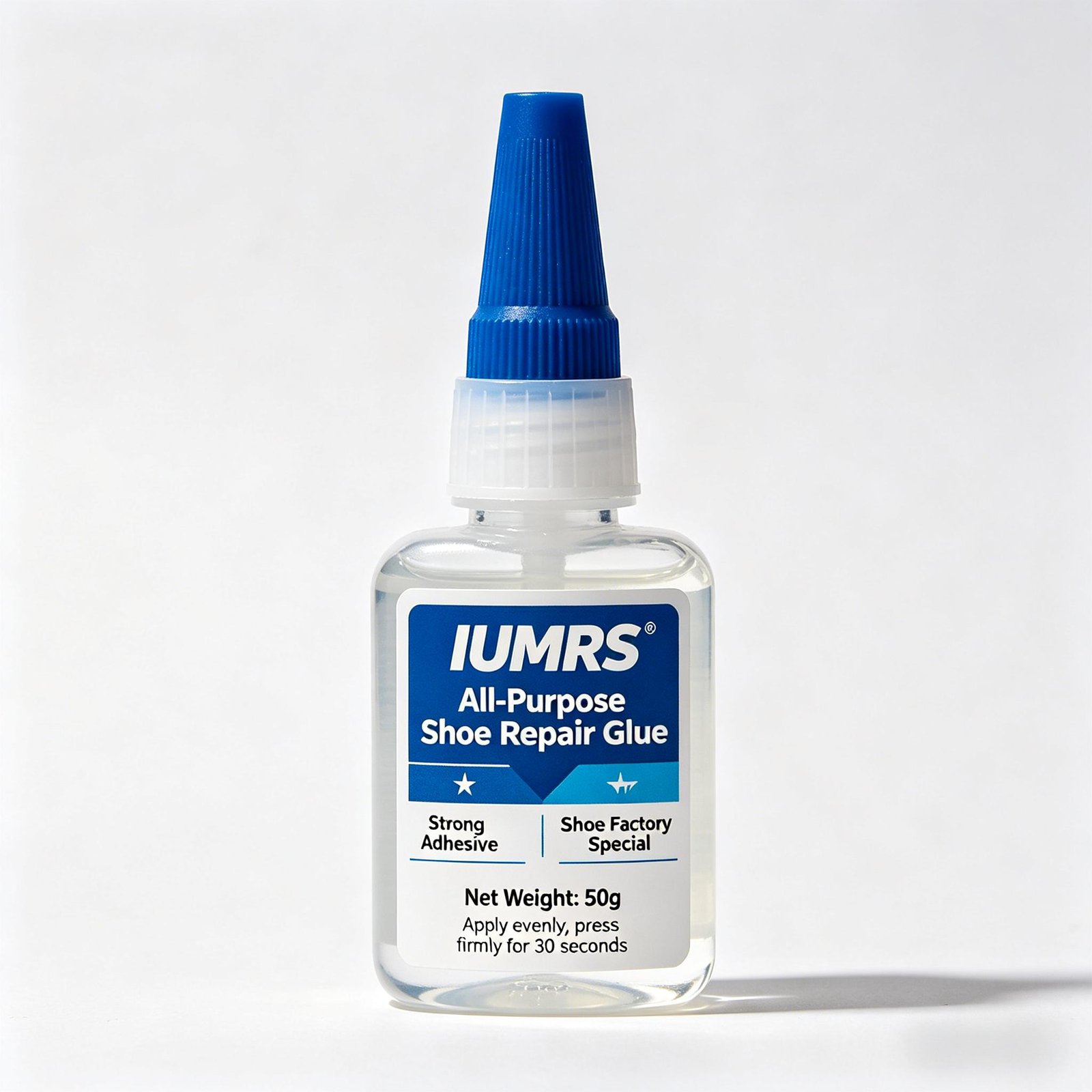
Introduction: A Broken Shoe Is Not the End
We’ve all been there. The sole of your favorite leather boots starts peeling after three years of loyal service. The toe cap of your child’s school sneakers lifts after one month. The heel of your partner’s dress shoes detaches ten minutes before an important wedding.
For most people, the reflex is the same: throw the shoes away and buy new ones.
But what if you didn’t have to?
What if a single tube of professional-grade glue could extend the life of every pair of shoes in your household by years?
Enter IUMRS Universal Shoe Glue – a new-generation epoxy resin adhesive specifically formulated for footwear repair. Unlike brittle superglues that crack the first time you walk, or cheap white glues that dissolve in rain, IUMRS shoe glue is flexible, waterproof, transparent, and incredibly strong.
In this article, we’ll explore:
- Why most shoe repairs fail (and how IUMRS solves those problems)
- The science behind resin-based flexible adhesives
- How professional cobblers and shoe factories use IUMRS
- A step-by-step guide to repairing any shoe
- Why “flexible” matters more than “strong”
Let’s step into it.
Chapter 1: The Problem with Ordinary Superglues
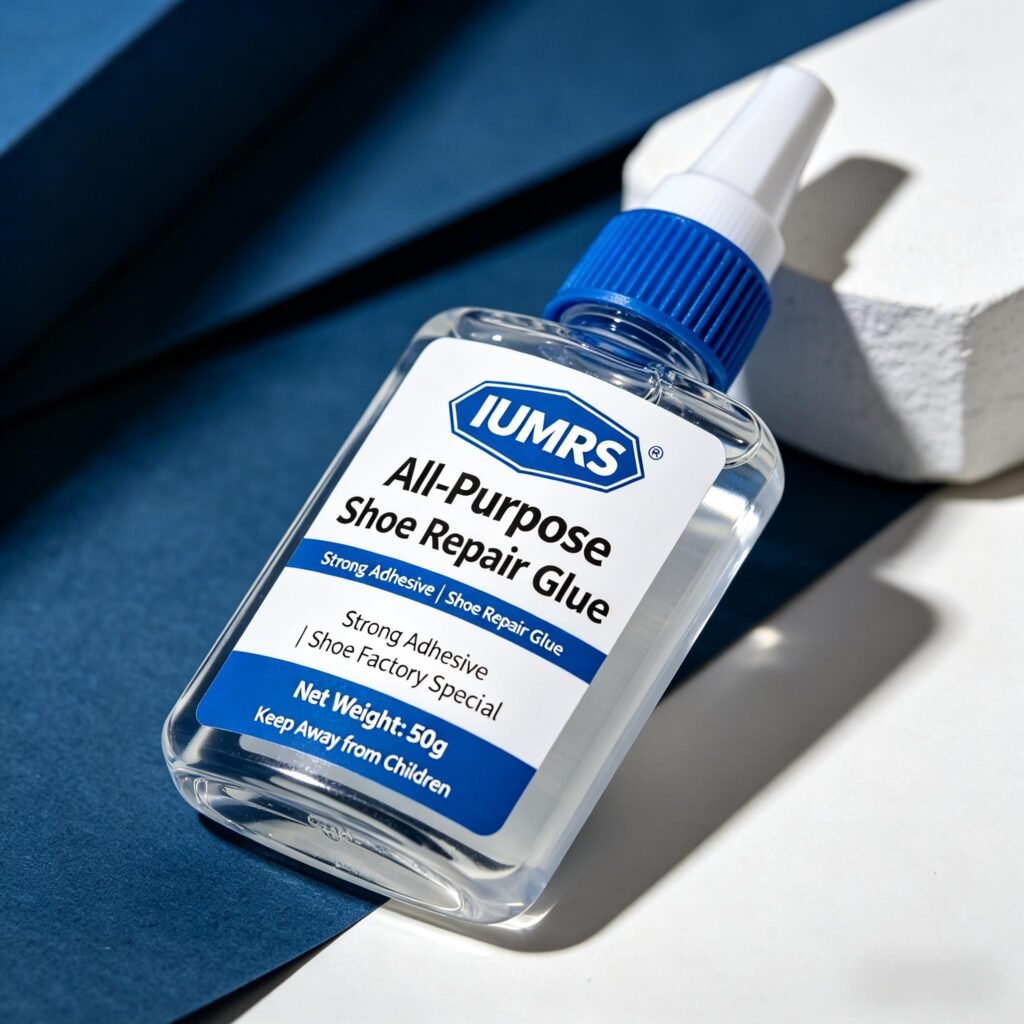
You’ve probably tried fixing a shoe with standard superglue (cyanoacrylate). It seems to work at first. You squeeze a drop. You press the sole down. You wait five minutes. The bond feels solid.
Then you walk to the mailbox.
Crack. The glued area snaps like a dry cracker. The sole is loose again – sometimes worse than before.
Why does superglue fail on shoes?
| Problem | Explanation |
|---|---|
| Extreme brittleness | Cyanoacrylate dries into a rigid, glass-like solid. Shoes flex thousands of times per day. Rigid + flexible = immediate failure. |
| Poor water resistance | Standard superglue breaks down when wet. Rain, puddles, sweat – all attack the bond. |
| White residue (blooming) | Superglue vapors react with moisture and leave ugly white marks on leather and fabric. |
| No gap-filling ability | Superglue requires perfectly mating surfaces. Worn shoe soles are never perfectly flat. |
| Hard on feet | A rigid glue line creates a hard ridge inside the shoe. You feel every step – painful. |
IUMRS shoe glue solves every single problem.
Chapter 2: What Makes IUMRS Shoe Glue Different?
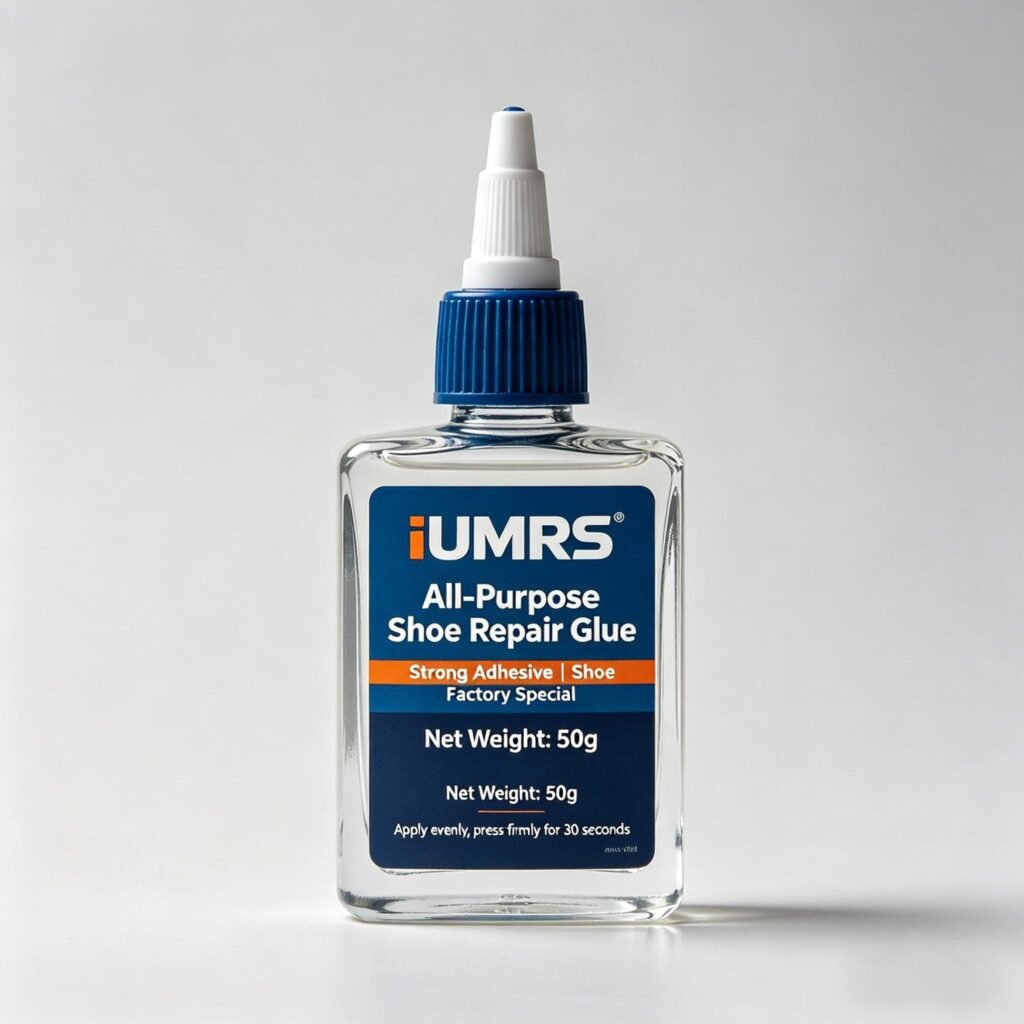
IUMRS is not repackaged superglue. It’s not generic craft glue. It’s a professional epoxy resin adhesive designed specifically for the unique demands of footwear.
Let’s break down the features.
2.1 High Flexibility – No More Cracking
This is the most important feature of any shoe glue. Shoes are not static objects. They bend, twist, compress, and stretch with every single step.
A typical adult takes 5,000 to 10,000 steps per day. Each step flexes the sole, the toe box, and the heel cup. A rigid glue line fails after the first dozen steps.
IUMRS shoe glue remains flexible after curing. It moves with your shoe, not against it.
| Bond Property | Superglue | IUMRS Shoe Glue |
|---|---|---|
| Hardness after cure | Glass-hard (80+ Shore D) | Soft rubber-like (flexible) |
| Flex test (1,000 bends) | Fails within 50 bends | Remains intact |
| Comfort underfoot | Feels like a stone | Feels like part of the sole |
| Stress distribution | Concentrated at bond line | Spreads across entire joint |
Verdict: Flexibility is not a luxury – it’s a requirement for shoe repair.
2.2 Waterproof & Weather Resistant
Shoes live in a wet world. Morning dew. Rain puddles. Spilled coffee. Sweaty feet. Snow slush. Even humidity in the air.
Most standard adhesives are:
- Water-soluble (white glues)
- Water-sensitive (cheap contact cements)
- Water-degraded (superglue)
IUMRS shoe glue is fully waterproof once cured.
- Safe for rain, washing, puddles
- Resists salt (road salt, sweat)
- No breakdown in high-humidity environments
- Ideal for sports shoes, work boots, rain boots
Test it yourself: Glue two pieces of rubber. Submerge in water for 24 hours. The bond remains as strong as day one.
2.3 Crystal Clear – No Ugly White Residue
Have you ever repaired a nice pair of black leather shoes, only to see a ugly white line at the repair? That’s “blooming” – a reaction between cyanoacrylate vapors and moisture.
IUMRS glue dries completely transparent.
- No white lines
- No yellowing over time
- Invisible repairs on any color shoe (black, brown, white, red)
Your repaired shoes will look professionally restored – not like a DIY patch job.
2.4 Does Not Harden – No “Hard Spot” Underfoot
This is a complaint you hear constantly from people who’ve tried repairing shoes with epoxy or superglue: “The repair is strong, but I can feel a hard lump under my foot.”
That hard lump causes blisters, hotspots, and general discomfort. Over time, it can even change your gait.
IUMRS glue cures into a soft, rubbery solid.
- Feels like the original sole material
- No hard ridges or pressure points
- Comfortable for all-day wear
You won’t even remember where the repair was.
2.5 Does Not Harm Shoe Materials
Some aggressive adhesives (cheap epoxies, industrial contact cements) contain solvents that:
| Damage | Result |
|---|---|
| Melt synthetic leather | Permanent discoloration and deformation |
| Harden natural leather | Cracking and stiffness |
| Stain fabric uppers | Ugly dark spots |
| Dissolve foam midsoles | Complete structural failure |
IUMRS shoe glue is safe for:
- Natural leather (cowhide, sheepskin, patent leather)
- Synthetic leather (PU, PVC)
- Rubber (natural, synthetic, EVA)
- Fabric, canvas, mesh
- Foam midsoles (EVA, polyurethane)
- Plastic and TPU components
No melting. No staining. No hardening. Just a clean, strong bond.
2.6 Replaces Stitching – “Sewing in a Bottle”
Stitching is the traditional way to attach shoe soles. It’s strong, but it has problems:
- Needles create holes that let in water
- Stitching can rot or break over time
- Restitching requires special equipment
- Thread can tear through worn leather
IUMRS shoe glue acts as “sewing in a bottle.”
- Creates a continuous, waterproof bond along the entire joint
- No holes = no water entry points
- Evenly distributes stress across the entire repair
- Can be used alone or to reinforce existing stitching
For many repairs, glue alone is stronger than stitches alone.
Chapter 3: The Science – Natural Resin-Based Epoxy
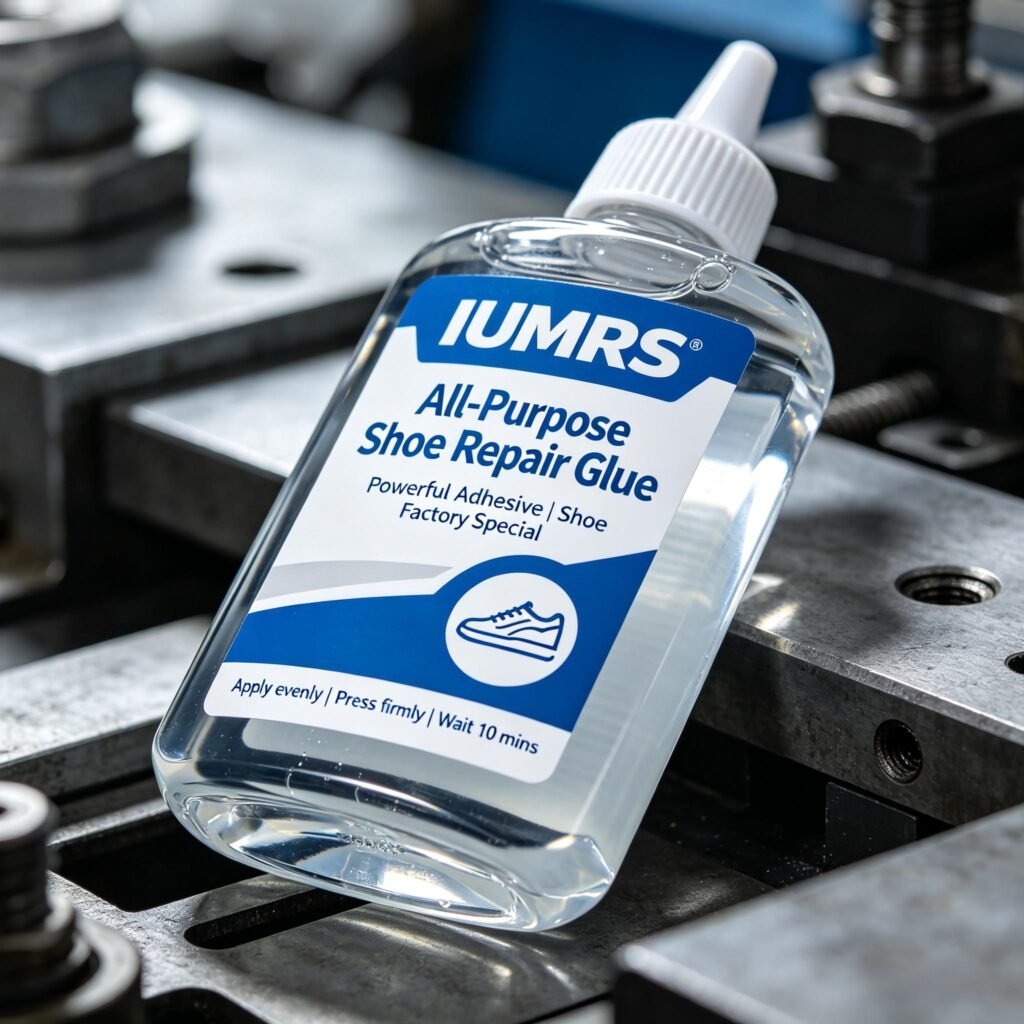
You might see the word “epoxy” and think of rock-hard industrial adhesives used to bond metal. That’s not this product.
IUMRS shoe glue is a specially formulated epoxy resin adhesive that uses natural resin extracts as part of its chemistry.
What Are Natural Resins?
Natural resins are sticky, organic substances secreted by trees and plants. Pine resin, for example, has been used as an adhesive for thousands of years – ancient boat builders used it to seal wooden hulls.
Modern resin-based adhesives combine:
- Natural resin extracts (for flexibility and natural “tack”)
- Synthetic epoxy polymers (for strength and waterproofing)
- Special plasticizers (to maintain softness after curing)
The result: an adhesive that is strong like an epoxy but flexible like a tree resin.
Why Shoe Factories Prefer Resin-Based Glues
Professional shoe manufacturers don’t use superglue. They use specialized resin-based adhesives that cure into flexible, waterproof bonds.
IUMRS brings that factory-grade formula to home users, cobblers, and small repair shops.
| User Type | Why They Choose IUMRS |
|---|---|
| Shoe factory | Consistent quality, fast curing, bulk pricing |
| Professional cobbler | Reliable repairs, satisfied customers, no comebacks |
| Home DIY user | Easy to use, one tube fixes many shoes |
Chapter 4: Step-by-Step – How to Repair Any Shoe with IUMRS Glue
You don’t need special tools or training. Follow these steps for a professional-quality repair.
What You’ll Need:
- IUMRS Universal Shoe Glue
- Sandpaper (80-120 grit, coarse)
- Cleaning cloth (lint-free)
- Rubbing alcohol or acetone (for degreasing)
- Clamps, rubber bands, or heavy books (for pressure)
- Toothpick or small brush (for precise application)
- Gloves (optional, but recommended)
Step-by-Step Instructions:
Step 1: Clean the surfaces thoroughly.
Remove any old glue, dirt, wax, or polish. Use sandpaper to roughen both surfaces slightly. The glue needs texture to grip.
Why this matters: Glue sticks to clean, slightly rough surfaces. Smooth, oily, or dirty surfaces = weak bond.
Step 2: Degrease both surfaces.
Wipe with rubbing alcohol or acetone on a lint-free cloth. Let dry completely (30 seconds).
Why this matters: Oils from your fingers, leather treatments, or manufacturing residue will prevent bonding.
Step 3: Apply IUMRS glue to ONE surface only.
A thin, even layer is all you need. For large areas (full sole), use a brush or spreader. For small repairs (peeling toe), a drop from the nozzle is enough.
Pro tip: Less is more. Excess glue will squeeze out and require cleanup. Too little glue leaves gaps.
Step 4: Wait 2-3 minutes (important!).
Do NOT press the surfaces together immediately. Let the glue become “tacky” – it should feel sticky but not wet.
Why this matters: Most contact-style adhesives need open time for solvents to flash off. Pressing too early weakens the bond.
Step 5: Press firmly together.
Align the pieces carefully. Press down with strong, even pressure.
Step 6: Apply clamping pressure.
Use clamps, rubber bands, or heavy books to maintain pressure. For shoe repairs:
- Sole peeling: Place heavy books inside the shoe and weights on top
- Heel lift: Wrap rubber bands around the entire heel
- Toe cap: Use a clamp or tightly wrap with tape
Step 7: Let cure for 24 hours.
Do NOT wear the shoes during this time. Do NOT test the bond. Leave the clamps in place for a full day.
Step 8 (optional): Clean squeeze-out.
If any glue squeezed out, wait until it’s partially dry (rubbery) then peel or roll it off. For fully cured glue, carefully trim with a razor blade.
Step 9: Wear with confidence.
After 24 hours, your shoes are ready for normal use. Walk. Run. Jump in puddles. The bond is fully cured and waterproof.
Chapter 5: Pro Tips for Different Shoe Types
| Shoe Type | Special Considerations |
|---|---|
| Leather dress shoes | Degrease thoroughly (polish and conditioner are enemies of glue). Lightly sand the leather – don’t sand through the finish. |
| Sneakers / athletic shoes | Clean the foam midsole carefully – some foams are fragile. Use light clamping pressure (too much pressure crushes foam). |
| Work boots | Heavy-duty use requires full 24-hour cure time. Consider reinforcing high-stress areas with a second glue layer. |
| Canvas / fabric shoes | Apply glue carefully – it can soak through thin fabric. Use a toothpick for precision. |
| Rubber rain boots | Rubber bonds easily. Rough up the surface with coarse sandpaper (60-80 grit) for maximum grip. |
| High heels | Stress is concentrated on a small area. Apply glue to both surfaces (thin layer each). Clamp firmly. |
Chapter 6: What Can You Repair? Almost Everything.
The IUMRS shoe glue is called “universal” for a reason. Here’s a partial list of repairs:
Footwear (Primary Use)
- Peeling soles (front, middle, or heel area)
- Detached heel blocks
- Separated toe caps
- Loose welts (Goodyear welt construction)
- Worn-down heel lifts (build up with glue + rubber sheet)
- Delaminated midsoles (sneakers)
- Repairing torn leather uppers (as a flexible filler)
- Fixing loose stitching (glue over the thread)
Beyond Shoes – Other Uses for IUMRS Glue
Because it’s flexible and waterproof, IUMRS works on many other items:
| Item | Repair Type |
|---|---|
| Leather bags & belts | Fixing detached straps, torn edges |
| Rubber boots (workwear) | Sealing cracks, reattaching soles |
| Wetsuits (neoprene) | Patching small tears (flexible bond) |
| Phone cases | Reattaching separated layers |
| Kids’ toys | Repairing flexible plastic or rubber toys |
| Sports equipment | Fixing grip tape, padding, rubber components |
Do NOT use on: Food-contact surfaces, medical devices, aquarium repairs, or items exposed to constant high heat (above 80°C / 175°F).
Chapter 7: Factory & Wholesale – Why Shoe Manufacturers Choose IUMRS
If you run a shoe factory, repair workshop, or cobbler business, adhesive is not an afterthought – it’s a core material.
Why Factories Switch to IUMRS
| Advantage | Benefit to Factory |
|---|---|
| Consistent viscosity | No machine clogging, consistent application |
| Predictable cure time | Production line timing stays reliable |
| Flexible bond | Fewer warranty returns (glue doesn’t crack) |
| Waterproof | Shoes can be sold for wet-weather use |
| Clear finish | No visible glue lines on premium products |
| Bulk pricing | Lower per-unit cost at scale |
Who Buys IUMRS Wholesale?
- Shoe factories (sports shoes, casual shoes, work boots)
- Shoe repair shops & cobblers (high-volume repairs)
- Leather goods manufacturers (bags, belts, accessories)
- Shoe retailers (offering in-store repair services)
- Online sellers (reselling IUMRS on Amazon, eBay, Shopify)