
 By fuyuhuaxue@iumrs.com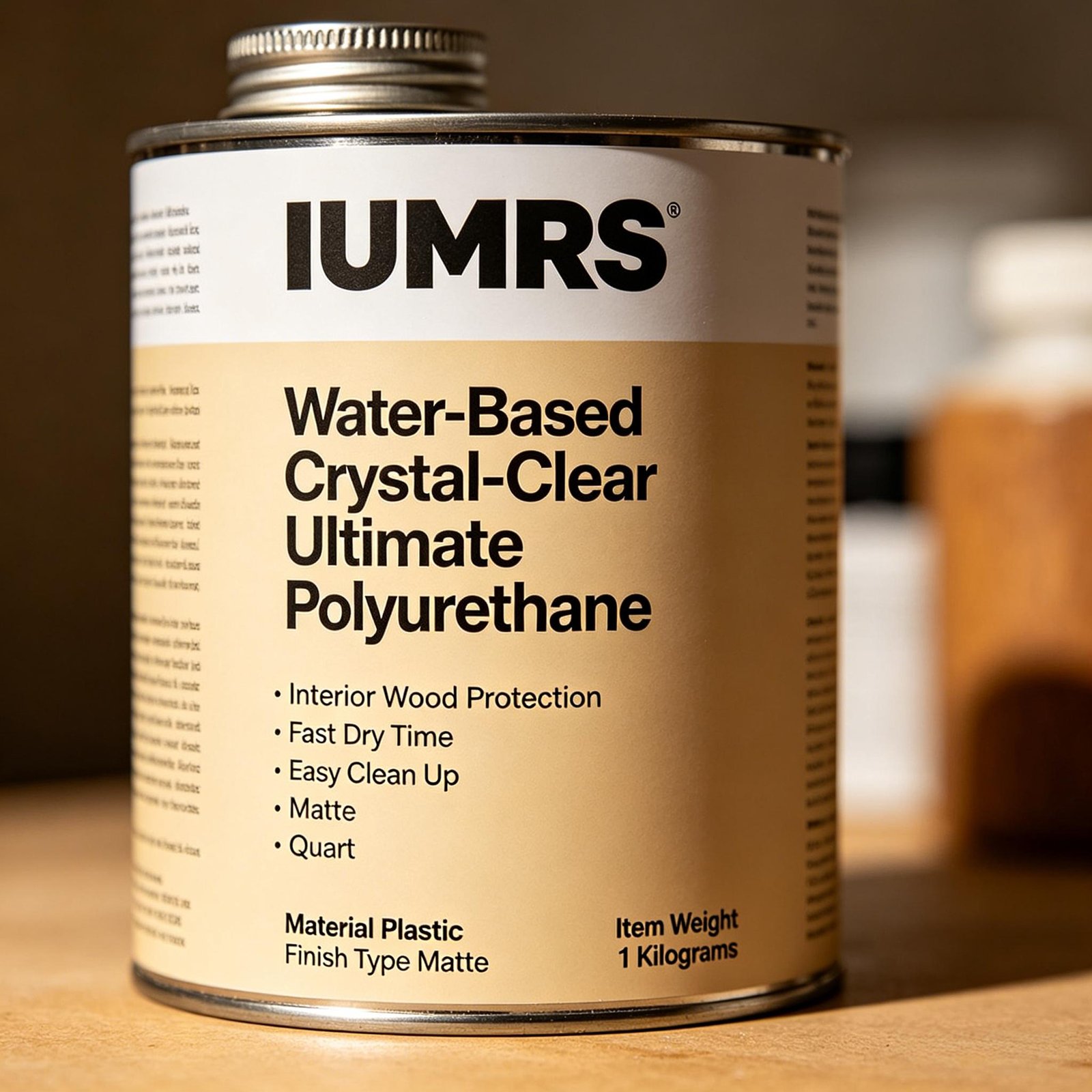
There is a quiet war happening in the world of interior design. For decades, the goal of finishing wood was to make it look wet. High gloss. High shine. High reflection. We wanted our furniture to look like it was encased in amber or buried under a sheet of glass.
But something shifted about five years ago. We stopped wanting our homes to look like showrooms. We started wanting them to look like us—textured, authentic, tactile.
We fell in love with raw white oak. With walnut slabs that feel like riverbeds. With butcher blocks that show the knife marks of a thousand family dinners. We realized that the “plastic shell” look, while durable, hid the very thing we loved about wood: the grain, the pores, the subtle undulations that prove this tree was once alive.
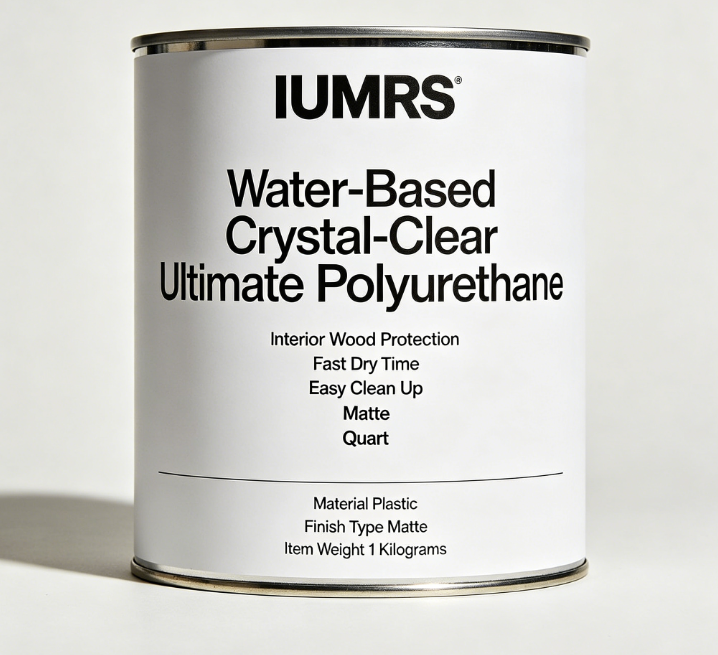
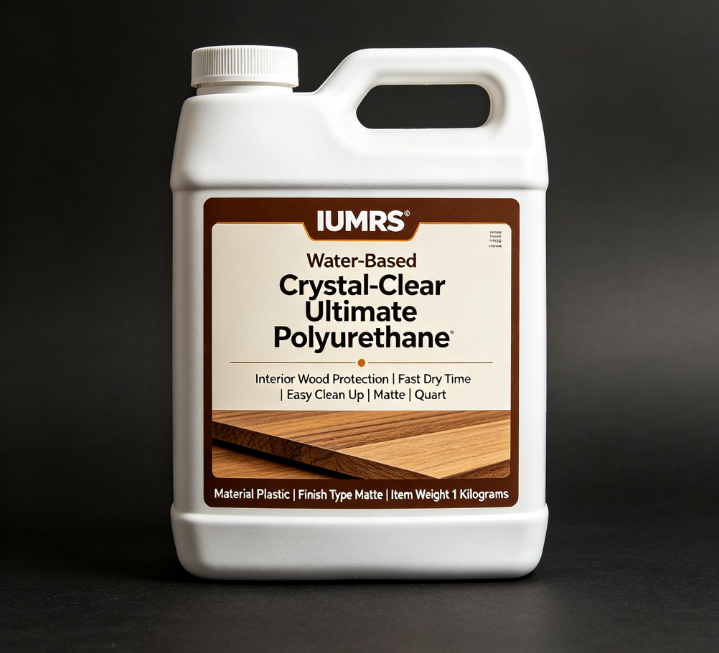
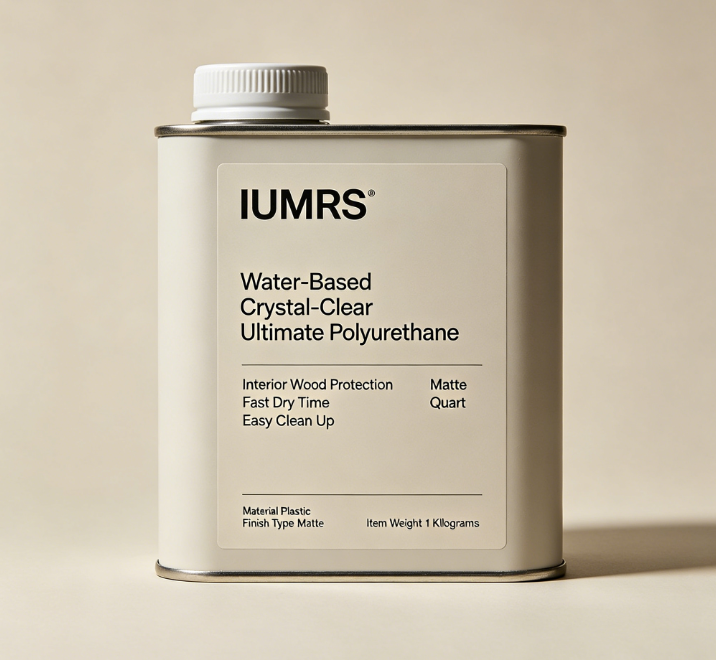
Enter the hero of the modern home: Water-Based Crystal-Clear Ultimate Polyurethane in Matte.
This is not your grandfather’s varnish. This is not a gloss reduction. This is a complete rethinking of what protection should look like. It is armor that disappears. It is a shield that feels like silk. And it dries in thirty minutes.
The Problem with “Protection”
For a long time, we accepted a trade-off. If you wanted to protect your dining table from red wine and your coffee table from coasters (or lack thereof), you had to accept a glossy, slippery, plastic-feeling surface. You had to accept ambering—that yellow, warm glow that turned white paint into beige and maple into honey.
Why did polyurethane turn yellow? Because traditional oil-based resins oxidize over time. It is a chemical reaction. Sunlight accelerates it. Within two years, that “clear” finish looks like someone spilled tea on it.
Water-based chemistry changed the rules. Without those oxidizing oils, the finish stays water-clear. Forever. A white cabinet finished with this polyurethane will still be white in a decade. A natural ash table will still look like the day you built it.
But early water-based finishes had a different problem: They looked like plastic wrap. They were clear, yes, but they sat on top of the wood in a way that felt artificial. They had a “blueish” cast or a cold, clinical feel.
The Crystal-Clear Ultimate Polyurethane solves this by optimizing the resin particle size. It is not just “water-clear”—it is optically transparent. It does not distort the light passing through to the wood grain. It is, for all practical purposes, invisible.
The Rise of Matte: Why Shine is Out
Let’s be honest about gloss for a moment. A high-gloss finish is high-maintenance. Every fingerprint glows in the light. Every dust mote becomes a constellation. Every single scratch—no matter how small—catches the overhead light like a flare.
Gloss is beautiful for museum pieces. For a grand piano? Yes. For a guitar? Absolutely. For the kitchen table where your teenager slams down a backpack every afternoon? Gloss is a disaster waiting to happen.
Matte is the answer to modern living.
A matte finish scatters light instead of reflecting it. Technically, it has a lower “gloss angle” (usually measured at 60 degrees or 85 degrees). But in human terms? It hides imperfections. It hides fingerprints. It hides the fine scratches that appear inevitably on any surface that is actually used.
The texture factor: When you run your hand across a matte-finished piece of wood, you feel the wood. You feel the grain. You feel the subtle rise and fall of the cathedral arches in oak or the smooth density of maple. With high gloss, you feel the plastic coating. With matte, you feel nature.
This is why interior designers are specifying matte finishes for nearly every residential application right now. It is the aesthetic of calm. It doesn’t shout. It whispers. It lets the wood—not the finish—be the star.
Fast Dry Time: The 30-Minute Miracle
Time is the one resource we cannot buy more of. Traditional polyurethane steals it in large, frustrating chunks.
Standard oil-based schedule:
- Apply coat 1: 2:00 PM
- Wait 6-8 hours (can’t touch it)
- Sand (30 minutes)
- Apply coat 2: 10:00 PM
- Wait overnight
- Sand (30 minutes)
- Apply coat 3: 8:00 AM next day
- Wait 8 hours
- Total time before you can use the piece: 24+ hours.
The Crystal-Clear Ultimate schedule:
- Apply coat 1: 2:00 PM
- Wait 30 minutes. It is dry to the touch.
- Apply coat 2: 4:30 PM (2-hour recoat window)
- Wait 30 minutes.
- Apply coat 3: 7:00 PM (if desired)
- Done. Use it the next morning.
That “dries to the touch in 30 minutes” claim is not an exaggeration. It is a chemical reality. Water-based finishes cure by evaporation. The water carrier leaves, the resin particles coalesce, and the film forms. In a room with moderate humidity (40-60%) and temperature (70°F), you will literally feel the surface change from wet to dry in the time it takes to watch a sitcom.
Why this matters for real people:
You are refinishing a window sill. The kids are napping. You have a one-hour window. With oil-based, that window is useless. With this product, you can apply a coat, clean your brush (soap and water—more on that later), and have the first coat dry before the kids wake up.
You are a landlord turning over a unit. You have 48 hours to repaint and refinish. Every hour counts. A 30-minute dry time means you can do three coats in one evening.
Coverage: 125 Square Feet of Possibility
Let’s look at the math. One quart of this polyurethane covers 125 square feet.
To put that in perspective:
- Kitchen cabinets: An average kitchen has 100-120 sq ft of cabinet surface area (doors + frames). One quart does the entire kitchen.
- Windows: 125 sq ft covers roughly 10 standard double-hung windows (both sides of the sash and the trim).
- Furniture: That is two large dressers, or one dining table with six chairs, or four nightstands.
Because the formula is thin and easy to spread (unlike thick, goopy oil finishes), you get more mileage. You are not wasting product on heavy buildup that you will just have to sand off later.
The Science of “Outstanding Stain and Scratch Resistance”
Here is where most matte finishes fail. Historically, to achieve a matte sheen, manufacturers add “flattening agents”—usually silica or wax particles that disrupt the light. The problem? Those same particles weaken the film. A matte finish used to mean a softer finish. Less protection.
The Crystal-Clear Ultimate Polyurethane uses a different approach. Instead of relying on heavy flatteners, it uses a controlled resin particle geometry. The resin itself is engineered to cure into a micro-textured surface that scatters light without compromising hardness.
Real-world stain resistance:
- Red wine: Dropped on a matte-finished oak table. It beads up. You wipe it. No ring.
- Coffee: Spilled on a white-painted cabinet. Wiped away. No brown stain.
- Ketchup: Left on a kid’s desk overnight. In the morning, it has dried into a crust. You peel it off. The finish underneath is perfect.
- Hand lotion and skin oils: Matte finishes are naturally more resistant to showing these, but the chemistry prevents the oils from penetrating the film and causing cloudiness.
Real-world scratch resistance:
- Dog nails: The matte surface scatters the light so much that superficial scratches are invisible to the naked eye. On a gloss surface, you would see them immediately.
- Keys and coins: Dragged across the surface, the film resists gouging. The hardness rating is comparable to much thicker, heavier finishes.
- Daily sliding (dishes, laptops, books): This is the silent killer of finishes. The micro-abrasions add up over time. This polyurethane’s self-crosslinking chemistry heals micro-scratches to a degree—the resin has a slight “memory” that allows tiny scratches to relax over time.
Easy Clean Up: The Underrated Superpower
Let’s talk about the moment after the project. You have just applied your final coat. You look at your brush. It is loaded with polyurethane.
If this were an oil-based product, you would now have a choice:
- Pour mineral spirits into a jar. Swish the brush around. Get your hands dirty. Dispose of the hazardous solvent properly (which is annoying).
- Throw the brush away and buy a new one ($10-$15 per brush, adds up fast).
If this were a water-based product (like this one), you walk to your kitchen sink. You squirt a little dish soap on the brush. You run warm water. You scrub the bristles with your fingers. Thirty seconds later, the brush is clean. You rinse. You shake it dry.
No solvents. No fumes. No hazmat disposal. No guilt.
For professional painters, this is a massive time saver. For DIYers, it removes the intimidation factor. You don’t need a chemistry set to clean up. You need soap and water, which you already have.
Ideal Applications for Matte Crystal-Clear Finish
1. White Oak and Light Woods
If you have invested in white oak flooring, shelving, or furniture, the worst thing you can do is put an ambering finish on it. White oak is prized for its cool, grayish-brown undertones and its dramatic open grain. A matte, crystal-clear finish preserves that Scandinavian look. The grain remains visible. The color remains true. The surface feels like stone.
2. Butcher Block Countertops
Butcher block is trendy. Butcher block is also thirsty. Many people use mineral oil, which requires reapplication every month. Others use epoxy, which feels like a cafeteria tray. The sweet spot? A water-based matte polyurethane. It seals the wood against water (no more black spots around the sink). It is food-safe once cured (check the label, but most water-based polys are). And the matte sheen keeps it looking like wood, not plastic.
3. Painted Trim and Cabinets (Especially White)
White painted trim that is high-gloss looks like a hospital. White painted trim with a matte clear coat looks like a historic home. Apply this polyurethane over your latex paint, and you get the durability of a floor finish with the soft appearance of flat paint. The matte clear coat protects the paint from scuffs and yellowing (because water-based doesn’t amber).
4. Children’s Toys and Furniture
The fast dry time means you can finish a rocking horse or a doll crib in an afternoon. The easy clean up means you aren’t exposing your kids to harsh solvents. The scratch resistance means the toy will survive being dropped, chewed (once fully cured, it is non-toxic), and dragged across the floor.
5. Workbenches and Shop Furniture
You might think a shop bench needs to be ugly. Actually, a smooth, sealed workbench is easier to clean glue off. It is easier to find small screws (they don’t disappear into raw wood grain). And a matte finish won’t blind you with glare when a workshop light hits it at a bad angle.
Application Tips for the Perfect Matte Result
Matte finishes have one enemy: burnishing. If you sand a matte finish, or if you rub it aggressively with a cloth over time, you can polish the micro-texture smooth. That creates a shiny spot. It is called “burnishing,” and it ruins the matte look.
How to avoid it:
- Do not over-sand between coats. Lightly scuff with 320-grit or a fine sanding sponge. Do not press hard.
- Use a high-quality synthetic brush. Foam brushes work well for matte finishes because they don’t leave heavy brush marks that you then need to sand out.
- Stir, don’t shake. Shaking introduces bubbles. Bubbles dry into rough spots. Rough spots get sanded. Sanding creates shine. Stir gently with a wooden stick.
- Apply thin, even coats. Unlike “triple thick” products, this is designed for multiple thin layers. Thin coats dry faster and level better.
- Clean with a damp cloth, not abrasive cleaners. Once cured, use a microfiber cloth slightly dampened with water. Avoid spray cleaners with citrus oils or ammonia—they can eventually soften water-based finishes.
The Verdict: Clarity Without Compromise
We have been conditioned to believe that “protection” must be visible. That a finish must look like a finish. That we must choose between durability and beauty.
The Water-Based Crystal-Clear Ultimate Polyurethane in Matte proves that is a lie.
You get the fast dry time (30 minutes to touch, 2 hours to recoat). You get the easy cleanup (soap and water). You get the massive coverage (125 square feet per quart). You get the durability (scratch and stain resistance that rivals oil-based products). And you get the clarity—true, non-yellowing, optical transparency.
But most importantly, you get the hand feel. That soft, natural, tactile connection to the wood that gloss finishes erase. You get to run your hand across a dining table and feel the history of the tree. You get to look at your white cabinets and see paint, not plastic.
Matte is not a trend. It is a return to authenticity. And this polyurethane is the invisible armor that makes that authenticity possible in a home with kids, pets, and real life.
Stop hiding your wood behind a glare. Let it breathe. Let it be itself.
One quart. One afternoon. A lifetime of clarity.