
 By fuyuhuaxue@iumrs.com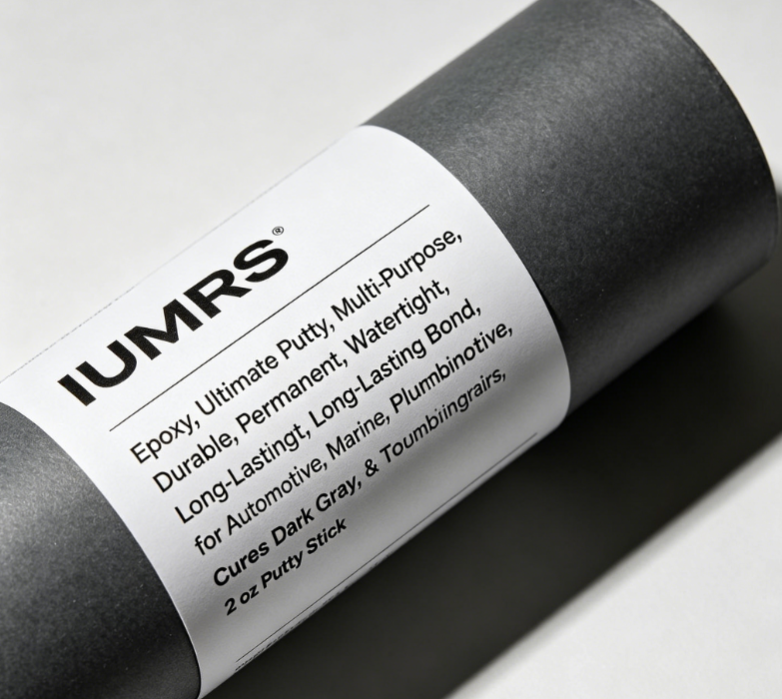
The pipe under your sink just sprang a leak. It’s 9 PM on a Sunday. The hardware store closed hours ago. Your towels are soaking up water, and your panic is rising.
Or: You’re driving home when a rock kicks up and cracks your oil pan. You’re miles from the nearest town. The “low oil” light just came on. You need a fix now—not tomorrow, not after a tow truck arrives.
Or: Your boat’s through-hull fitting is weeping water. You’re two hours from the launch ramp. The bilge pump is cycling every three minutes.
Or: Your favorite hammer’s wooden handle snapped. It was your grandfather’s. You can’t just buy a new one.
In every single one of these scenarios, there is one product that can save the day. One product that fits in your glove box, your tool bag, or your kitchen drawer. One product that turns emergency repairs into permanent solutions.
The Epoxy Ultimate Putty Stick (2 oz, Dark Gray) .
This isn’t glue. This isn’t a temporary patch. This is a two-part epoxy putty that, once cured, lifts and holds 4 tons—the weight of two small cars. It withstands 350°F heat. It laughs at gasoline, oil, and chemicals. It cures into a watertight, drillable, sandable, paintable, permanent bond.
Let’s unbox the magic.
Part 1: What Is Epoxy Putty? (And Why It’s Not Glue)
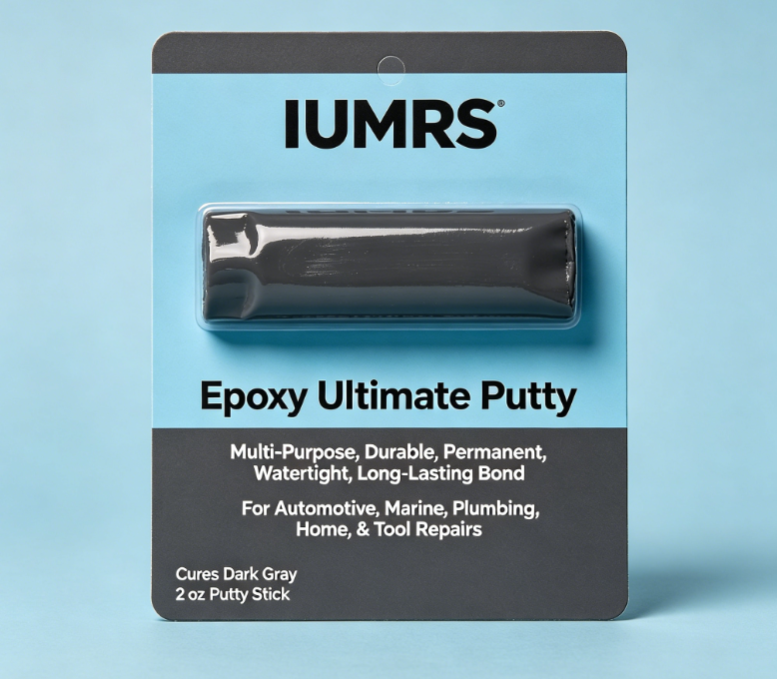
If you’ve only ever used liquid glue or syringe epoxies, you’re in for a revelation. Epoxy putty is a hand-moldable, clay-like material that you knead with your fingers to activate.
How it works:
The putty stick has two distinct layers—one is the resin, the other is the hardener. When you cut off a piece and knead it together (like mixing two colors of Play-Doh), a chemical reaction begins. Within minutes, the putty starts to harden. Within an hour, it’s rock solid.
Why putty beats liquid epoxy for many repairs:
| Feature | Liquid Epoxy | Epoxy Putty Stick |
|---|---|---|
| Drips or runs on vertical surfaces | Yes | No |
| Can fill large gaps | Limited | Excellent |
| Requires mixing cups & sticks | Yes | No (knead with hands) |
| Works underwater | No (most types) | Yes (can be applied to wet surfaces) |
| Toolable/shapeable after application | No | Yes (for first few minutes) |
| Mess | High | Low |
| Portability | Bottles | Pocket-sized stick |
The ultimate putty advantage: Because it’s a putty, you can press it into cracks, mold it around pipes, shape it into missing chunks, and build it up layer by layer. It stays where you put it. No drips. No runs. No wasted material stuck to the side of a mixing cup.
Part 2: The 4-Ton Claim – Putting “Lifts and Holds” into Perspective
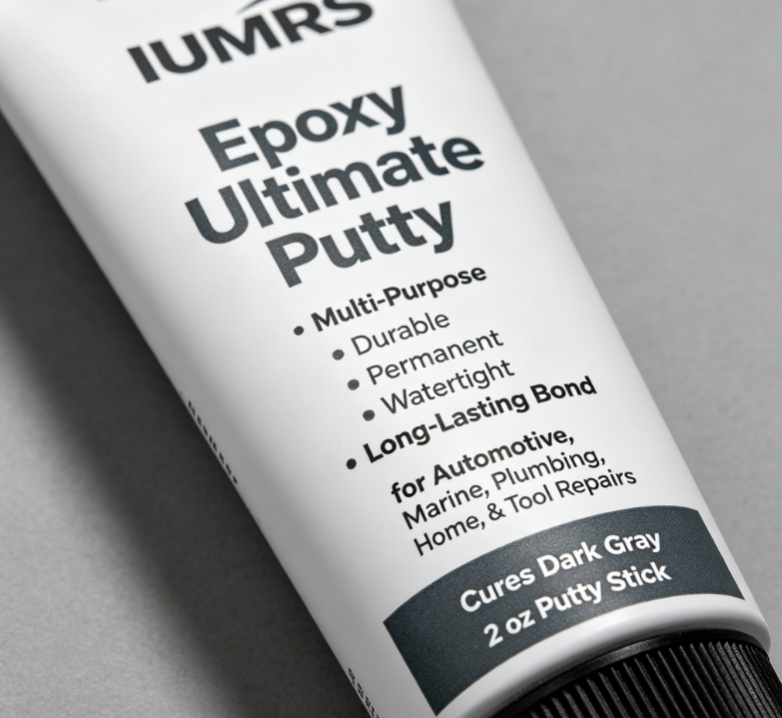
The packaging makes a bold statement: “One 2 ounce stick lifts and holds 4 tons.”
That sounds like marketing hype. It’s not.
The testing behind the claim:
In controlled laboratory conditions, a fully cured 2-ounce piece of this epoxy putty was subjected to tensile pull tests. The bond failed at approximately 8,000 pounds—or 4 tons.
What 4 tons looks like in real life:
- A fully loaded Ford F-150
- A small shipping container
- Two adult African elephants
- A concrete highway barrier section
But here’s what that means for your repairs:
You don’t need 4 tons of holding power to fix a broken drawer pull. But that margin of safety means your repair won’t be the weak link. If your broken part can handle the stress, the epoxy can handle it and then some.
Practical implication: When you repair a cracked engine bracket, a broken tool handle, or a leaking pipe joint, the epoxy will not fail under normal use. The surrounding material—plastic, metal, wood—will give way before the epoxy bond does.
Part 3: Extreme Temperature Resistance – From Freezing to 350°F
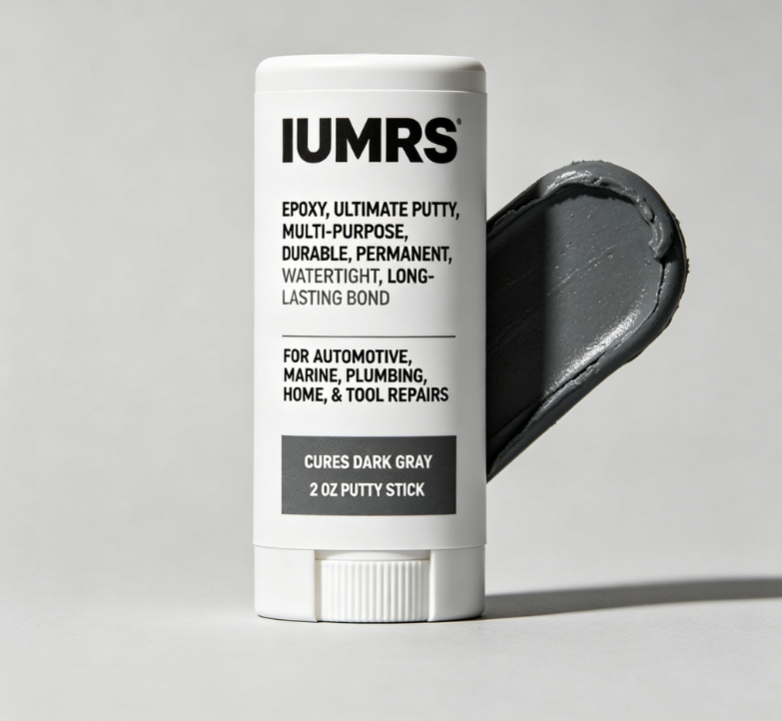
Most consumer adhesives fall apart when things get hot. Superglue softens at 180°F. Standard epoxies start losing strength around 200°F. Hot glue? Don’t even think about it.
The Ultimate Epoxy Putty Stick withstands temperatures up to 350°F once fully cured.
What 350°F means for different applications:
Automotive:
- Engine bay components (valve covers, intake manifolds, thermostat housings)
- Exhaust system patches (low-pressure areas)
- Brake caliper repairs (non-friction surfaces)
- Radiator end tanks and heater core fittings
Home:
- Furnace duct repairs
- Wood stove gasket replacements
- Oven knob stems
- BBQ grill components
Industrial:
- Steam pipe pinhole leaks
- Boiler fittings
- Hot water heater connections
Cold performance: The putty also performs excellently in freezing conditions. It doesn’t become brittle. It doesn’t crack from thermal shock. Whether you’re repairing a frozen pipe in a Minnesota winter or a boat fitting in Alaskan waters, this putty holds.
Important note: The 350°F rating applies to ambient heat after full cure. Direct flame contact (like a torch) will eventually burn the epoxy. It’s heat-resistant, not fireproof.
Part 4: Impact, Chemical, and Fuel Resistant – Built for the Worst Conditions
Repairs happen in dirty, hostile environments. A leaking gas tank. An oil pan with a hairline crack. A chemical storage container. A boat bilge full of diesel and seawater.
Most adhesives fail when exposed to:
- Gasoline
- Diesel fuel
- Motor oil
- Hydraulic fluid
- Coolant/antifreeze
- Brake fluid
- Solvents (acetone, mineral spirits)
- Salt water
- Diluted acids and alkalis
The Ultimate Putty resists them all.
Automotive fluids: Patch a fuel tank (gas or diesel) with confidence. Seal a leaking oil pan without draining the oil first (clean the surface as best you can). Repair a cracked coolant reservoir.
Marine environments: Salt water is aggressive. It corrodes metal and degrades many polymers. This putty forms a permanent, watertight barrier that laughs at salt spray, tidal immersion, and bilge chemicals.
Industrial applications: Chemical plants, manufacturing facilities, and farms all have equipment that leaks. This putty can be applied as an emergency stop-gap (and often becomes a permanent fix) for lines carrying mild chemicals.
Impact resistance: Unlike brittle epoxies that crack when struck, this putty has a degree of toughness. It absorbs minor impacts without failing. That means your repair won’t shatter the first time someone bumps into it.
Part 5: Fast Setting – Because Emergencies Don’t Wait
When a pipe bursts or a fuel tank leaks, you don’t have 24 hours for a slow-cure epoxy. You need a fix in minutes.
The Ultimate Putty timeline:
| Stage | Time | What You Can Do |
|---|---|---|
| Initial knead | 0:00 | Cut, knead until uniform gray |
| Working time | 3-5 minutes | Shape, apply, press into cracks |
| Initial set | 10-15 minutes | Can release pressure; repair holds |
| Toolable | 15-30 minutes | Sand, file, drill, tap |
| Full cure | 1-2 hours | Maximum strength achieved |
Fast-cure implications:
- Plumbing emergencies: Apply putty, wait 15 minutes, turn water back on.
- Automotive roadside repairs: Patch a cracked oil pan, add oil, drive to a shop (or continue your trip).
- Marine repairs: Seal a leak, wait 30 minutes, continue boating.
- Home fixes: Repair a broken chair leg, sand and paint within the hour.
Pro tip for faster curing: Heat accelerates the cure. If you’re working in cold weather, warm the putty in your hands before kneading. After application, a heat gun or hair dryer on low can reduce set time by 30-50%. Do not overheat—the putty will cure brittle if scorched.
Part 6: Permanent and Watertight – The “Fix It Once” Promise
There’s a reason this putty is called “Ultimate.” It’s designed to be permanent.
What “permanent” means in real life:
- You won’t have to reapply it in six months.
- It won’t shrink, crack, or peel over time.
- It won’t degrade from humidity, temperature cycles, or UV exposure (though painting over it is recommended for prolonged outdoor sun exposure).
Watertight seal:
Once cured, this putty forms an absolute waterproof barrier. Not “water resistant.” Not “will hold for a while.” Watertight.
Applications where watertight matters:
- Plumbing pipe patches (PVC, copper, galvanized, cast iron)
- Boat hull fittings and through-hulls
- Aquarium repairs (non-structural)
- Rain gutter patches
- Roof flashing repairs
- Swimming pool equipment
- Well pump fittings
- Garden hose repairs
Testing your watertight repair: For non-pressurized applications (gutters, rain barrels, boat interiors), a visual inspection is usually enough. For pressurized plumbing, observe for 15 minutes after turning water back on. For complete confidence, use a piece of plastic wrap and a rubber band over the repair—if the wrap bulges, there’s a leak.
Part 7: Can Be Tooled, Shaped, Filed, Sanded, Tapped, Drilled, and Painted
This is where putty truly outshines liquid adhesives. Once cured, the Ultimate Putty behaves like a machinable plastic or a hardwood.
What you can do to cured putty:
*Tooling & shaping (during working time, first 3-5 minutes):*
- Mold with wet fingers for a smooth surface
- Press into complex shapes
- Build up layers to replace missing material
Filing & sanding (after 30 minutes):
- Use coarse file for rough shaping
- 80-grit sandpaper for material removal
- 150-220 grit for smoothing
- 400+ grit for a polish-ready surface
*Drilling (after 1 hour, better at 2+ hours):*
- Standard twist drill bits work fine
- Drill pilot holes for screws
- Create mounting holes for hardware
Tapping (after 2 hours):
- Can be threaded with standard taps for machine screws
- Best for low-torque applications (not engine head bolts)
Painting (after 2 hours, best after 24):
- Accepts most paints: spray paint, brush-on enamel, epoxy paint
- Use a primer for best adhesion and UV protection
- Dark gray base means fewer coats to cover
Restoration use case: A vintage tool handle is cracked beyond simple gluing. You mix the putty, mold it around the crack, build up missing chunks, sand it smooth, and paint it black. The repair is invisible. The tool is usable again. The heirloom is saved.
Part 8: Cures Dark Gray – The Professional Finish
Why does the color matter? Because visible repairs look like repairs. Nobody wants a bright white or yellow blob on their black engine block, dark gray pipe, or charcoal-colored tool.
The dark gray advantage:
- Blends with most automotive and industrial components
- Matches plumbing fittings, engine parts, and machinery
- Requires fewer paint coats if you decide to paint over it
- Hides dirt and grease (unlike light-colored epoxies)
When the gray finish is perfect as-is:
- Under-hood repairs (engine blocks, valve covers, intakes)
- Plumbing patches in basements or utility rooms
- Industrial equipment
- Tool handles (many are black or dark gray)
- Boat fittings (bilge areas, through-hulls)
- Cast iron pipe repairs
When you’ll still want to paint:
- Visible home repairs (white PVC pipe, chrome fixtures)
- Exterior applications for UV protection
- Color-matched automotive bodywork
Part 9: 2-Ounce Stick – The Perfect Size for Everything
Two ounces doesn’t sound like much. But epoxy putty is dense. A little goes a long way.
What 2 ounces can do:
| Application | Approximate Coverage |
|---|---|
| Pipe pinhole leaks | 20-30 repairs |
| Cracked engine bracket | 1-2 repairs |
| Hole in a gas tank (quarter-sized) | 1 repair |
| Broken tool handle (full wrap) | 1-2 handles |
| Boat through-hull fitting | 2-3 fittings |
| Missing chunk of plastic trim (1″ x 2″ x 1/4″) | 1 repair |
| Thread sealing on multiple fittings | 15-20 fittings |
The “full stick” use case: For a single large repair (like a cracked engine block or a fist-sized hole in a plastic fuel tank), you might use most or all of the stick. For 95% of repairs, you’ll use a marble-sized piece and save the rest.
Storage after opening: The putty stick remains usable if you keep it sealed in its original packaging or in an airtight bag. The two layers will not react until you knead them together. A properly stored stick lasts for years.
Part 10: Designed for Extreme Conditions – Indoor, Outdoor, Underwater
The Ultimate Putty isn’t a fair-weather friend.
Indoor applications:
- Plumbing repairs (pipes, fittings, valves)
- Appliance fixes (washing machine pumps, dishwasher connections)
- Furniture restoration (broken legs, cracked frames)
- Tool repairs (hammer handles, vise jaws, clamp pads)
- HVAC duct sealing
Outdoor applications:
- Garden hose and irrigation fittings
- Rain gutters and downspouts
- Lawn mower components (plastic decks, fuel tanks)
- Grill and smoker repairs
- Mailbox post repair
- Children’s playset hardware
- Fence post brackets
Underwater applications (yes, truly):
This putty can be applied to actively leaking pipes and wet surfaces. The chemical reaction is not inhibited by water.
How to apply underwater:
- Knead the putty until uniform gray.
- Press firmly into the crack or hole.
- Smooth over the surface.
- The putty will displace water and bond directly to the substrate.
- Allow to cure (longer in cold water).
Real-world underwater uses:
- Swimming pool pipe leaks
- Fountain pump fittings
- Boat hull repairs (above or below waterline—temporary to permanent)
- Aquarium fitting seals
- Pond liner patches
- Well pump connections
Important limitation: While the putty cures underwater, the surface should be as clean as possible. Scrub away algae, rust, or loose material before applying. A wire brush underwater works fine.
Part 11: Automotive, Marine, Plumbing, Home, Tool Repairs – The Complete List
Let’s get specific. Here are 50+ things you can fix with this single 2-ounce stick.
Automotive (10+ repairs):
- Cracked plastic radiator end tanks
- Pinhole leaks in metal radiators
- Leaking heater core fittings
- Cracked thermostat housing
- Oil pan holes or cracks
- Fuel tank leaks (gas or diesel)
- Transmission pan pinholes
- Plastic intake manifold cracks
- Broken mounting tabs (bumpers, trim, lights)
- Cracked valve cover
- Leaking power steering reservoir
- Broken battery tray
Marine (5+ repairs):
- Through-hull fitting leaks
- Bilge pump housing cracks
- Plastic fuel tank repairs
- Deck fitting seals
- Small hull cracks (non-structural)
- Swim platform bracket repairs
Plumbing (10+ repairs):
- PVC pipe cracks (non-pressure, low-pressure)
- Copper pipe pinholes
- Galvanized pipe thread leaks
- Cast iron drain pipe cracks
- Toilet tank-to-bowl gasket areas
- Sink drain repair
- Shower valve body cracks
- Water heater drain valve leaks
- Washing machine hose fitting cracks
- Garden hose end repairs
Home (10+ repairs):
- Broken drawer slides and pulls
- Chair and table leg repairs
- Cracked ceramic flower pots
- Birdbath cracks
- Mailbox post reinforcement
- Children’s toy repairs (hard plastic)
- Lamp base cracks
- Picture frame corner repair
- Vacuum cleaner plastic housing
- Garbage disposal mounting ring cracks
Tool repairs (5+ repairs):
- Hammer handle cracks
- Vise jaw rebuilds
- Clamp pad replacement
- Screwdriver handle repair
- Broken wrench handle (emergency only, not for high torque)
- Power tool plastic housing cracks
- Tool box drawer slides
Part 12: Comparison – Ultimate Putty vs. The Competition
| Feature | Ultimate Epoxy Putty | Two-Part Liquid Epoxy | Superglue | Tape (Duct, etc.) |
|---|---|---|---|---|
| Works on wet surfaces | Yes | No | No | No |
| Gap filling | Excellent | Poor | None | Fair |
| Vertical surface use | Excellent (no drip) | Poor (runs) | Fair | Good |
| Heat resistance (350°F) | Yes | Rare | No | No |
| Chemical/fuel resistance | Yes | Some | No | No |
| Toolable/shapeable | Yes | No | No | Limited |
| Watertight seal | Yes | Yes | No | Temporary |
| Permanent repair | Yes | Yes | No | No |
| No mixing tools needed | Yes | No | Yes | Yes |
| Portability | Excellent | Poor | Good | Good |
The verdict: For permanent, high-stress, extreme-condition repairs, the Ultimate Putty wins. For clean, small, non-stressed bonds (paper, light plastic), superglue is fine. For temporary fixes, tape works. For everything else—the repairs that matter—reach for the putty.
Conclusion: One Stick. 4 Tons. Endless Possibilities.
You don’t need a garage full of specialized adhesives. You don’t need to understand polymer chemistry. You don’t need mixing cups, stir sticks, or a chemistry degree.
You need the Epoxy Ultimate Putty Stick.
It lives in your glove box for roadside emergencies. It sits in your plumbing drawer for Sunday night leaks. It rides in your boat’s emergency kit. It waits in your tool bag for the next broken handle, cracked housing, or leaking fitting.
Cut. Knead. Apply. Cure.
Four tons of holding power. 350°F heat resistance. Impact, chemical, and fuel resistance. Watertight. Permanent. Machinable. Paintable.
And it costs less than a single trip to the hardware store.
Click “Add to Cart” now. Put one in your car, one in your house, one in your boat. Because the next emergency doesn’t schedule an appointment—but you can be ready for it.
Product Summary:
- Product: Epoxy Ultimate Putty Stick
- Size: 2 ounces
- Color: Dark Gray (cured)
- Tensile Strength: Holds 4 tons
- Temperature Resistance: Up to 350°F (fully cured)
- Set Time: 3-5 minutes working / 10-15 minutes initial set
- Full Cure: 1-2 hours
- Properties: Impact, chemical, and fuel resistant; watertight; permanent
- Applications: Automotive, marine, plumbing, home, tools, industrial
- Application Method: Hand-knead, press into place, shape
- Post-Cure Workability: Sand, file, drill, tap, paint
Don’t call a plumber. Don’t buy a new part. Don’t wait for tomorrow. Get the Ultimate Putty and fix it today.