
 By fuyuhuaxue@iumrs.com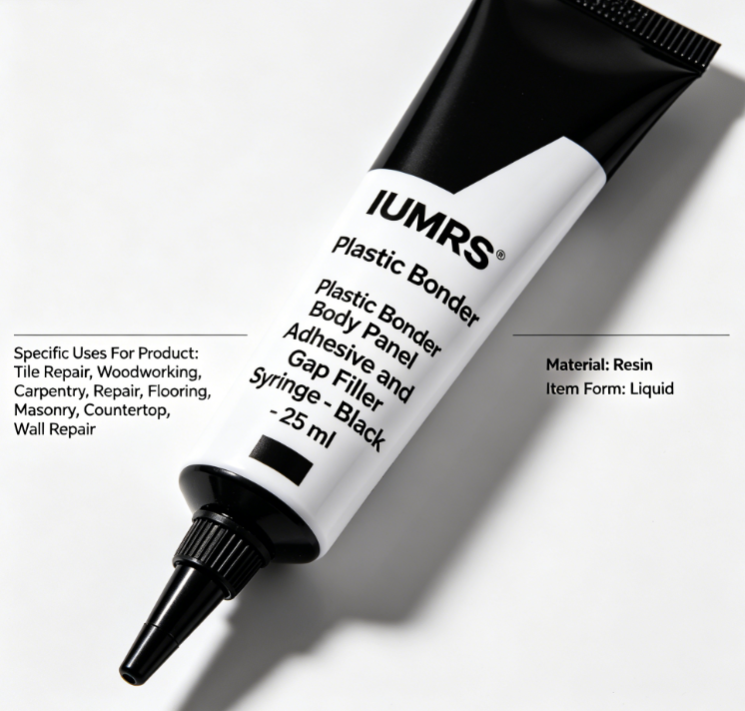
You’re standing in your garage, staring at a cracked bumper cover. The plastic is flexible—the kind that seems to reject every glue you’ve ever tried. Superglue? Cracked off in a week. Epoxy? Peeled away like sunburnt skin. Hot glue? Please.
The body shop quoted you $800 for a replacement. The dealership said the part is “non-repairable.” Your wallet is crying. Your weekend is disappearing.
But what if they’re wrong?
For decades, repair professionals have known a secret that the big box stores don’t want you to know: not all plastics are created equal, and not all adhesives work on all plastics. Thermoset plastics (like SMC and fiberglass) and thermoplastics (like polypropylene and ABS) require completely different chemical approaches.
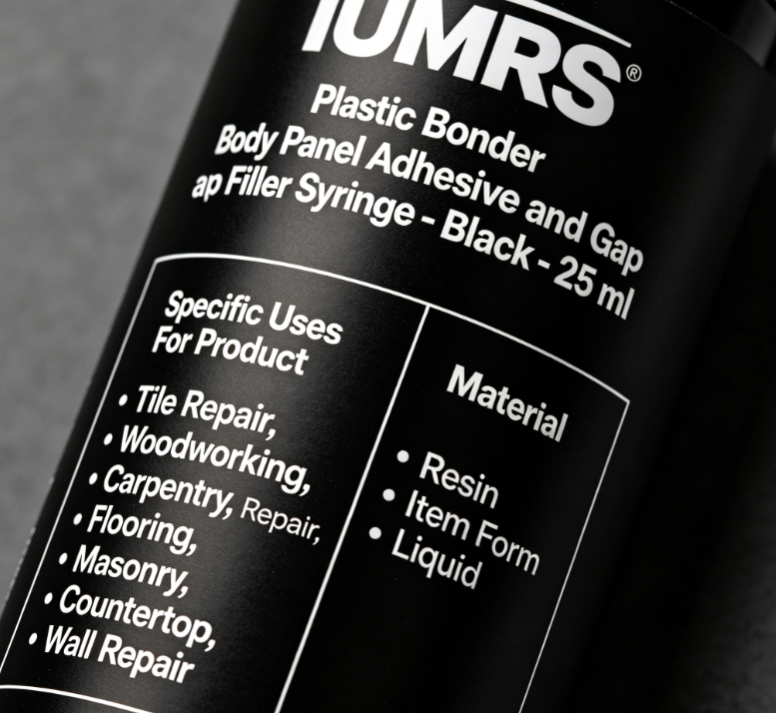
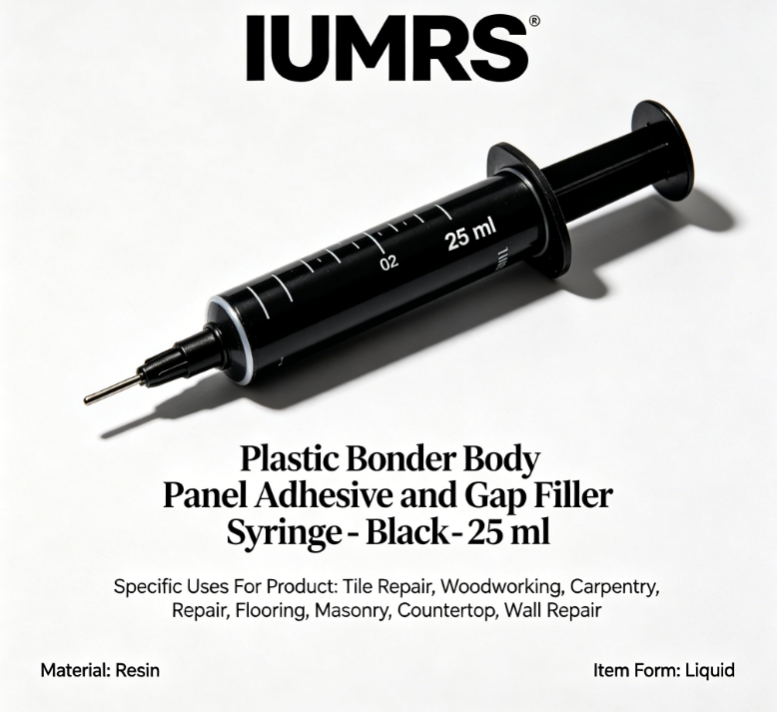
Enter the game-changer: IUMRS Plastic Bonder Body Panel Adhesive and Gap Filler Syringe – Black – 25 ml.
This isn’t glorified superglue. This is a professional-grade, two-part urethane adhesive system engineered specifically for the plastics that other glues refuse to stick to. Thermoset. Carbon fiber composites. Thermoplastics. Coated metals. Concrete. Even PVC.
And it dries black—matching automotive trim, body panels, and dark plastics seamlessly.
Let’s dive into why this 25 ml syringe contains more repair power than a cabinet full of failed products.
Part 1: What Is Plastic Bonder? (And Why Urethane Beats Epoxy)
Most people hear “adhesive” and think “epoxy.” Epoxy is great for many things—metal, wood, ceramics. But epoxy has a weakness: it’s rigid. When you bond it to flexible plastics (like bumpers or trim panels), the epoxy stays hard while the plastic flexes. Something has to give. Usually, the bond.
Plastic Bonder is different. It’s a two-part urethane adhesive system.
Urethane vs. Epoxy: The Critical Difference
| Property | Epoxy | Urethane (IUMRS Plastic Bonder) |
|---|---|---|
| Flexibility | Rigid, brittle | Semi-flexible, impact-resistant |
| Bond to thermoplastics | Poor | Excellent |
| Bond to thermoset plastics | Fair | Excellent |
| Sandability | Hard, requires power tools | Sands easily by hand in 30 minutes |
| Gap filling | Good | Excellent |
| Automotive use | Limited | OEM-approved chemistry |
Why urethane works on “problem plastics”:
Urethane chemically reacts with the surface of many plastics, creating a bond that’s both strong and flexible. When your car’s bumper flexes going over a speed bump, the urethane flexes with it. No cracking. No peeling. No failure.
The “quick-set” advantage:
Plastic Bonder sets in 15 minutes and can be sanded in 30 minutes. Compare that to epoxy, which often needs 6-24 hours before you can touch it. For professionals working on deadline—or DIYers who want their car back on the road today—that speed is invaluable.
Part 2: The Chemistry of Sticking to Everything
Let’s get specific about what Plastic Bonder actually bonds to, because this is where most adhesives fail.
Thermoset Plastics (the hard, heat-set plastics):
- SMC (Sheet Molding Compound) – used in truck beds, Corvette body panels
- Fiberglass – boat hulls, classic car bodies, shower surrounds
- Carbon fiber composites – high-end automotive, aerospace, sporting goods
- Bakelite – vintage electronics, knife handles
Thermoplastics (the meltable, flexible plastics):
- ABS – automotive interior trim, motorcycle fairings, Lego bricks
- PVC – pipes, electrical conduit, signage
- Polycarbonate – headlight lenses, safety glasses
- Acrylic – aquariums, windows, displays
- Nylon – gears, bushings, zip ties
- Polypropylene (PP) and Polyethylene (PE) – note: requires flame treatment or specialized primer; test first
Other materials:
- Coated metals (painted, powder-coated, or e-coated)
- Concrete and masonry
- Wood (treated and untreated)
- Many rubber compounds
The 1:1 mix ratio: Like the best adhesives, Plastic Bonder uses a simple 1:1 volume ratio. The syringe dispenses both parts simultaneously. Mix for 30 seconds, apply, and you’re done.
Part 3: 3,770 PSI Tensile Strength – Putting the Number in Perspective
Adhesive companies love to throw around big numbers. “Super strong!” “Industrial grade!” “The world’s strongest!” But what do those numbers actually mean?
Tensile strength measures how much pulling force a bonded joint can withstand before breaking. Plastic Bonder achieves 3,770 PSI (pounds per square inch).
What does 3,770 PSI look like in real life?
- A 1-square-inch bond (about the size of a postage stamp) can hold 3,770 pounds of pure pulling force.
- That’s roughly the weight of a small car.
- In practical terms: a Plastic Bonder repair on a bumper cover will fail somewhere else before the bond fails. The plastic itself will tear before the adhesive lets go.
Comparative strength:
| Adhesive Type | Typical Tensile Strength (PSI) |
|---|---|
| Hot glue | 100-300 |
| White craft glue | 500-1,000 |
| Superglue (cyanoacrylate) | 1,500-2,500 |
| General epoxy | 2,000-3,000 |
| IUMRS Plastic Bonder | 3,770 |
| Automotive structural adhesive | 3,500-4,500 |
Shear strength (different direction) is also impressive: Plastic Bonder resists sliding forces exceptionally well, making it ideal for body panels that experience wind resistance and vibration.
The permanent bond claim: Once cured, this isn’t a temporary fix. This is a permanent repair. You aren’t “gluing it back together until you can afford a replacement.” You’re fixing it for good.
Part 4: Black Finish – The Color of Professional Repairs
Why does color matter for an adhesive? Because visible repairs look like repairs.
The black advantage:
- Automotive trim: Bumper covers, grilles, mirror housings, and lower body cladding are almost always black or dark gray. A black adhesive blends in.
- No painting required: For many repairs, the black finish is acceptable as-is. No need to color-match or apply touch-up paint.
- Hides imperfections: Black is forgiving. Small surface irregularities disappear.
- Professional appearance: Body shops use black adhesives because customers don’t want to see white or yellow glue lines on their dark-colored cars.
When you might still paint over it: If you’re repairing a painted body panel (like a red bumper), you’ll still need to sand, prime, and paint. But the black base means you won’t see a light-colored adhesive shadow if the paint chips later.
Gap filling in black: When used as a gap filler (more on that below), the black color blends with dark plastics and shadowed areas, making the repair virtually invisible.
Part 5: Gap Filling – Bridging the Impossible
Perfect breaks are rare. Most breaks are messy. Chipped edges. Missing chunks. Warped plastic that won’t go back together flush. Gaps.
Superglue requires surfaces to touch. If there’s a gap, superglue wicks away and fails. Epoxy can fill gaps, but it’s often too runny for vertical gaps or too brittle for flexible gaps.
Plastic Bonder is an exceptional gap filler.
What “gap filler” means:
- You can bridge gaps up to 1/4 inch (or more with multiple layers)
- The adhesive stays where you put it (thixotropic = non-drip)
- It cures to a sandable, paintable surface
Common gap-filling applications:
Automotive:
- Missing chunks in bumper covers
- Gaps where cracked plastic has warped out of alignment
- Filling holes left by removed license plates or trim
- Smoothing surface imperfections before painting
Home & workshop:
- Cracked PVC pipe where the edges no longer meet
- Gaps in broken lawn furniture
- Missing pieces of plastic storage bins
- Filling screw holes in plastic panels
Marine & outdoor:
- Gaps in cracked kayak or canoe hulls
- Missing chunks in fiberglass pool steps
- Repairing cracked plastic gutter sections
How to use as a gap filler:
- Clean and rough the surfaces.
- Mask around the gap with painter’s tape.
- Mix Plastic Bonder.
- Apply into the gap, slightly overfilling.
- Allow to cure for 30 minutes.
- Sand flush with the surrounding surface.
- Remove tape and finish as desired.
Part 6: 15-Minute Set / 30-Minute Sandable – Speed Without Sacrifice
Time is money. Whether you’re a professional body shop billing by the hour or a DIYer with a limited weekend, you need an adhesive that works fast.
The Plastic Bonder timeline:
| Time | Event |
|---|---|
| 0:00 | Dispense and mix (30 seconds of stirring) |
| 0:30 | Apply to surfaces |
| 1:00 | Press parts together |
| 15:00 | Adhesive has set. Parts will not move. Can release clamps. |
| 30:00 | Can be sanded, drilled, or filed. |
| 24 hours | Full chemical cure (though 80% of strength is achieved in first few hours) |
Why sandability at 30 minutes matters:
Most adhesives require you to wait hours—sometimes overnight—before sanding. By the time you can sand, you’ve lost momentum. Your project sits on the bench. You move on to something else. The repair never gets finished.
With Plastic Bonder, you can apply at 10 AM, sand at 10:30 AM, prime at 10:45 AM, and paint by lunch. That’s a same-day repair.
Tips for cold weather working:
Urethane adhesives cure more slowly in cold temperatures. If your shop is below 60°F (15°C):
- Warm the syringe in your hands or near a space heater (don’t overheat)
- Work in a warmer area if possible
- Expect set times to double in very cold conditions
Tips for hot weather:
Above 85°F (29°C), the set time accelerates. You may have only 8-10 minutes of working time. Mix smaller amounts. Work quickly.
Part 7: Indoor or Outdoor – Built for the Elements
Unlike water-based glues or many hobby epoxies, Plastic Bonder is engineered for real-world exposure.
Weather resistance:
- UV resistant (won’t break down in sunlight)
- Water resistant (rain, car washes, humidity)
- Temperature resistant (from freezing to under-hood heat)
- Chemical resistant (mild solvents, road salts, automotive fluids)
Outdoor applications that work:
- Repairing cracked plastic lawn furniture
- Fixing gutter downspouts
- Mending plastic fence sections
- Attaching plastic trim to RVs or campers
- Repairing fiberglass boat components (above waterline)
Indoor applications:
- PVC pipe repairs (non-pressure, drainage applications)
- Plastic toy repair (for heavy-duty toys, not delicate collectibles)
- Workshop jigs and fixtures
- Appliance plastic repair (washing machine panels, vacuum cleaner housings)
What it’s NOT for:
- Pressurized PVC pipes (use solvent weld for plumbing)
- Submerged marine applications below waterline (use marine-grade epoxy)
- Flexible rubber or silicone (nothing bonds to silicone)
- Polyethylene or polypropylene without surface treatment (these plastics require flame or plasma treatment first)
Part 8: Over 40 Years of Trust – The IUMRS Legacy
You aren’t buying from a startup that launched last week. IUMRS has been innovating adhesives for more than 40 years.
Why that matters:
- Formulations have been refined over decades, not months
- Real-world feedback from professionals has shaped the product
- Manufacturing quality control is proven
- The company stands behind every syringe
The loyalty factor: IUMRS products have “earned a loyal following from people who take pride in their work.” That’s not marketing fluff—that’s a statement about their customer base. Body shop technicians. Restoration specialists. DIY enthusiasts who refuse to accept “it can’t be fixed.”
The “World’s Strongest Bond” claim: In their category (urethane adhesives for plastic repair), IUMRS consistently delivers top-tier tensile strength and real-world durability. They don’t make claims they can’t back up.
Part 9: Simple to Use – No Chemistry Degree Required
Professional strength shouldn’t mean professional complexity. IUMRS designed Plastic Bonder for anyone who can follow simple instructions.
Step-by-step (15 minutes to set):
- Prepare the surface. Clean with isopropyl alcohol or a plastic prep wipe. Remove grease, dirt, and old adhesive residue. For very smooth plastics, lightly sand with 80-120 grit sandpaper to create “tooth.”
- Dispense. The dual-syringe delivers a perfect 1:1 ratio. Depress the plunger until both black and white pastes appear at the tip.
- Mix. Dispense a ribbon onto a disposable surface (cardboard, plastic lid, wax paper). Use a popsicle stick or metal spatula to mix vigorously for 30 seconds. The color will become uniform (dark gray/black).
- Apply. Spread onto one surface only. For gap filling, overfill slightly.
- Join. Press parts together firmly. Clamp or tape if necessary (though the adhesive is thick enough to hold many parts on its own).
- Set aside. Wait 15 minutes for initial set. The parts will not move after this point.
- Sand (optional). After 30 minutes, you can sand, shape, or drill the cured adhesive.
- Full cure. Wait 24 hours before subjecting the repair to heavy loads or stress.
Cleanup: Before curing, clean tools and hands with acetone or lacquer thinner. After curing, the adhesive must be sanded or mechanically removed.
Storage: Replace the cap on the syringe. Store upright at room temperature. Shelf life is approximately 12-18 months.
Part 10: The 25 ml Size – Perfect for Precision Repairs
At 25 ml total volume (both components combined), this syringe is sized for targeted repairs, not bulk applications.
What 25 ml gets you:
- Approximately 25-50 linear inches of a 1/8-inch bead
- Enough to repair 2-4 typical bumper cracks
- Enough gap filling for 5-10 small chips or holes
- Perfect for the DIYer’s toolbox (not a giant industrial cartridge that hardens before you use it up)
Who should buy the 25 ml size:
- Home DIYers: You don’t need a quart of adhesive for one cracked mirror housing.
- Body shops (as a backup): Keep a few syringes on hand for small repairs without opening a large cartridge.
- Mobile repair technicians: The syringe fits in a tool bag. No mixing guns required.
- Hobbyists: Model building, RC car repair, 3D print finishing.
When to buy larger volumes: If you’re repairing multiple vehicles daily or filling large gaps (over 6 inches long), look for IUMRS’s larger cartridges. But for 80% of users, 25 ml is the sweet spot.
Part 11: Comparison – Plastic Bonder vs. The Alternatives
| Feature | IUMRS Plastic Bonder | JB Weld PlasticWeld | Superglue | 5-Minute Epoxy |
|---|---|---|---|---|
| Bond to thermoplastics | Excellent | Good | Poor | Fair |
| Bond to thermoset plastics | Excellent | Good | Poor | Good |
| Flexibility | Semi-flexible | Rigid | Rigid | Rigid |
| Set time | 15 min | 15 min | 30 sec | 5 min |
| Sandable | 30 min | 15-20 min | No | 4+ hours |
| Tensile strength | 3,770 PSI | 3,500 PSI | 2,500 PSI | 2,800 PSI |
| Color | Black | Off-white | Clear | Clear/yellow |
| Gap filling | Excellent | Good | None | Good |
| Outdoor durable | Yes | Yes | No | Limited |
The verdict: For automotive and outdoor plastic repairs, Plastic Bonder wins on flexibility and sanding speed. For structural repairs on rigid plastics, JB Weld is a competitor. For quick household fixes, superglue is fine. For professional-grade plastic bodywork? Plastic Bonder is the answer.
Conclusion: Stop Fighting with Stubborn Plastics
You’ve tried the cheap fixes. You’ve watched the YouTube videos. You’ve wasted money on products that promised the world and delivered a mess.
It’s time to use what the professionals use.
The IUMRS Plastic Bonder Body Panel Adhesive and Gap Filler Syringe – Black – 25 ml gives you 3,770 PSI of bond strength, 15-minute set time, 30-minute sandability, and the chemical compatibility to stick to the plastics that other adhesives reject.
Thermoset. Thermoplastic. Carbon fiber. Coated metal. Concrete. PVC.
It’s black. It’s flexible. It’s permanent.
Click “Add to Cart” now. Your bumper, your trim, your project, and your sanity will thank you.
Product Summary:
- Type: Two-part urethane adhesive
- Volume: 25 ml (total, both components)
- Mix Ratio: 1:1 by volume
- Set Time: 15 minutes
- Sandable: 30 minutes
- Full Cure: 24 hours
- Tensile Strength: 3,770 PSI
- Color: Black
- Works On: Thermoset plastics, carbon fiber composites, thermoplastics (ABS, PVC, polycarbonate, acrylic, nylon), coated metals, concrete, wood
- Applications: Body panel repair, gap filling, plastic trim, bumper covers, fiberglass, PVC pipes, outdoor furniture
- Brand Heritage: 40+ years of innovation
Don’t replace it. Repair it. Get the IUMRS Plastic Bonder today.