
 By fuyuhuaxue@iumrs.com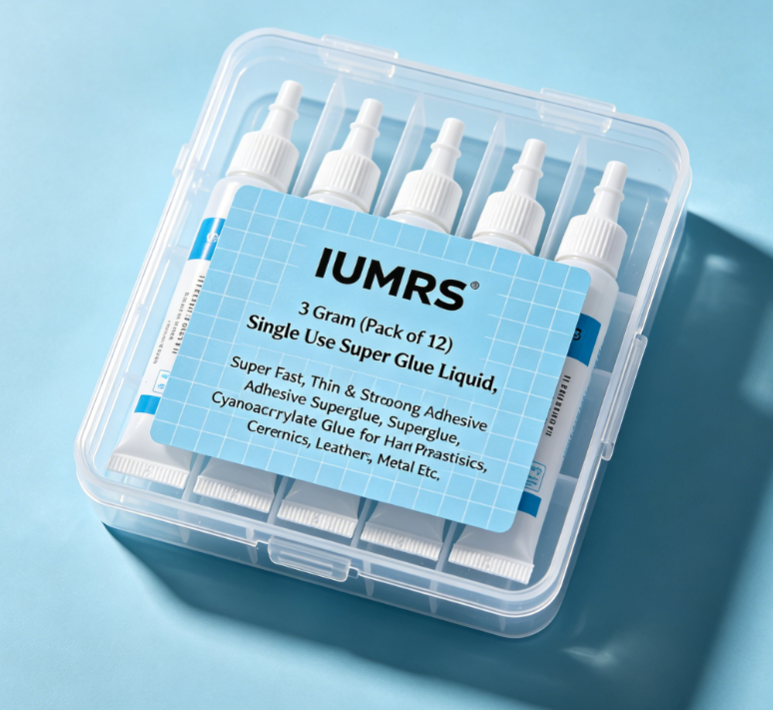
I have a confession to make. For years, I kept a “lifetime supply” of super glue in my junk drawer. It was a large bottle, the kind you buy at a hardware store, thinking you’re being smart and economical. It was a thick, gel-like formula that promised to bond anything.
The reality? Every time I opened that bottle, the nozzle was crusted shut. I would jab a pin into it, squeeze desperately, and a glob of yellowed, stringy glue would erupt all over my fingers. I’d glue a broken ceramic flowerpot back together, but the glue would leave a horrible white, chalky residue. A week later, the bond would snap. And the bottle? Half empty, but rock solid. Useless.
I thought super glue was just… like that. Unpredictable. Messy. Short-lived.
Then a friend who does professional model-building handed me a small foil tube. “Try these,” he said. “Single-use. Twelve in a box. You’ll never go back.”
He was right.
The product he gave me was the 3 Gram (Pack of 12) Single Use Super Glue Liquid – a fast-penetrating, thin, industrial-strength cyanoacrylate adhesive that has completely changed how I approach repairs, crafts, and everyday disasters.
Let me walk you through why this little pack of twelve tubes is the most underrated tool in my workshop, and why you need it in your home right now.
The Curse of the “Big Bottle”: Why Larger Isn’t Smarter
Before we sing the praises of single-use, let’s be brutally honest about the traditional super glue bottle.
Super glue (cyanoacrylate) cures in the presence of moisture. Every time you open a bottle, humid air rushes in. The glue inside the nozzle begins to polymerize. You might get one good use out of a large bottle. Then you put the cap on, but the damage is done. The next time you reach for it—maybe three months later—the nozzle is clogged, or the entire bottle has turned into a solid block of plastic.
You’ve essentially paid for 20ml of glue but only used 2ml. The rest is waste.
And that’s not even the worst part. Large bottles encourage overuse. You squeeze, and too much glue comes out. With thick gel formulas, that excess sits on the surface, taking forever to cure and leaving a cloudy, white residue. With thin liquids, it runs everywhere—into your table, onto your clothes, down the side of your precious heirloom.
Large bottles are also impossible to control. The nozzle is either too wide for precision work or too narrow and clogs instantly.
The single-use tube solves every single one of these problems.
Meet the 3 Gram Tube: Small Size, Mighty Performance
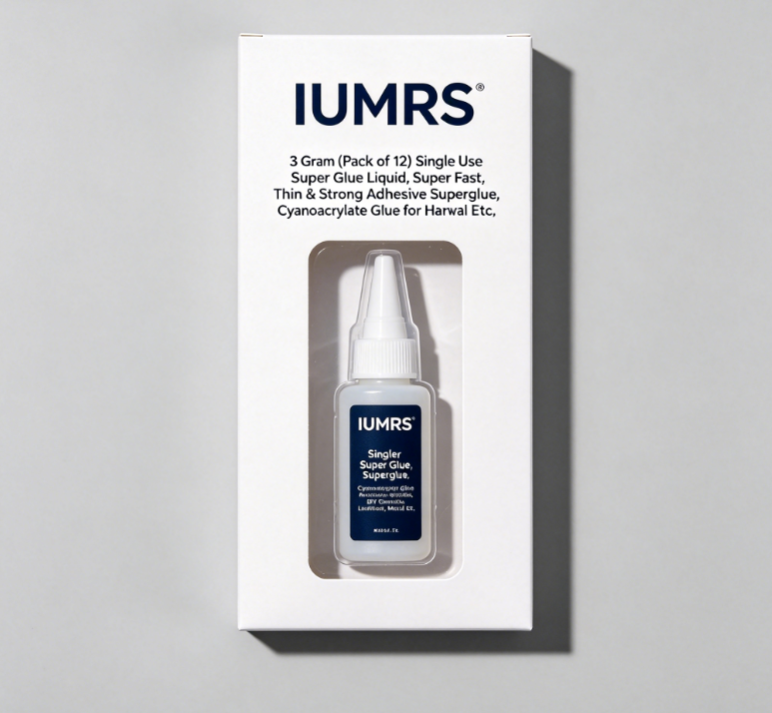
The 3 Gram (Pack of 12) Single Use Super Glue Liquid comes in small, cylindrical foil-lined tubes. Each tube contains exactly 3 grams of fresh, potent, ultra-thin cyanoacrylate glue.
Why 3 grams? Because that’s enough for one to three substantial repairs—or a handful of small craft projects. You open a tube, use what you need, and if you’re careful, you can reseal the nozzle (more on that later) and use the remainder within a few days. But the real magic is that you are never forced to keep a half-used bottle sitting around for months, slowly dying.
Each tube is a commitment to freshness. When you pierce the seal (using the cleverly redesigned easy-pierce cap), you know that the glue inside is as strong and fast as the day it was manufactured.
Let’s break down the features that make this product a game-changer.
Feature #1: Super Fast, Thin & Strong – The Liquid That Seeps In
The product description emphasizes: *“Super Glue LIQUID – Fast Penetrating Formula, high-fluidity liquid adhesive sets in 10-45 seconds.”*
This is not a gel. This is a thin, watery liquid. And that is a feature, not a bug.
Why? Because many repairs require the glue to wick into tight cracks and porous surfaces. Imagine you are fixing a cracked ceramic vase. The crack is hairline. A thick gel will just sit on top of the crack, never penetrating deep enough to create a strong bond. It will look ugly and fail quickly.
A thin liquid, on the other hand, flows into the crack by capillary action. It seeps deep into the microscopic pores of the ceramic. When it cures (in as little as 10 seconds), it forms a three-dimensional mechanical lock inside the material. The bond is incredibly strong because the glue is inside the crack, not just on top of it.
I tested this on a broken hard plastic laptop hinge. The plastic had snapped cleanly. I held the two pieces together, touched the applicator tip to the seam, and the glue literally sucked itself into the gap. I counted to fifteen. When I let go, the hinge was solid. No dripping, no mess, no excess glue squeezing out.
The key, as the description notes, is to apply thinly. Because the glue is so fast, applying too much can cause “whitening” – that ugly cloudy residue that cyanoacrylate is famous for. A thin film cures clear and almost invisible. A thick blob cures white and brittle. The single-use tube helps you control the amount because you’re not squeezing a giant bottle; you’re gently pressing a small tube.
Feature #2: The Easy-Use Packaging – No More Clogged Nozzles
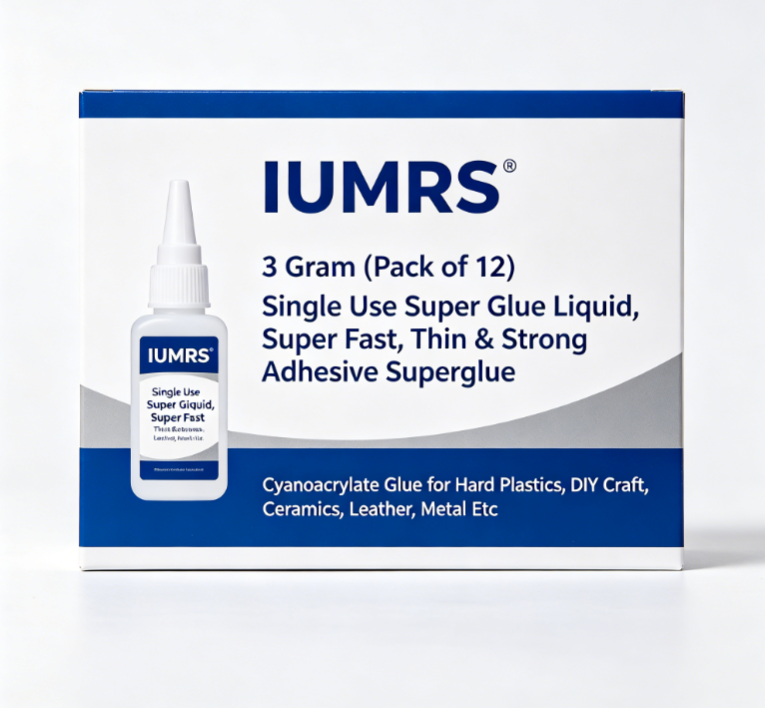
Let me quote the description again: “Easy-Use Packaging with Upgraded Design, features our improved easy-pierce cap (redesigned for effortless opening) and precision nozzle for clean application. Air-tight tube prevents drying out. Note: Firmly twist cap clockwise to puncture seal – do not squeeze tube.”
This is genius. I have struggled with those tiny metal tubes where you have to stab the seal with a pin, inevitably bending the pin and stabbing your finger instead. Or those plastic bottles with a twist-off cap that never quite seals again.
The easy-pierce cap on these tubes is simple: you twist the cap clockwise. Inside the cap, there is a sharp point that punctures the foil seal. You feel a slight pop. That’s it. The tube is open. No tools, no stabbing, no mess.
The precision nozzle is long and narrow. It fits into the smallest crevices. I used it to glue a loose watch crystal back into its metal bezel. The nozzle was fine enough to deposit a microscopic ring of glue exactly where I needed it, without touching the glass.
And because each tube is air-tight until you pierce it, the unused tubes in the pack stay fresh for years. You can keep the box in your drawer, and when disaster strikes, you have a perfectly good tube ready to go.
Feature #3: Multi-Surface Bonding (With Honest Guidelines)
The description lists: “Bonds ceramic, rubber, metal, paper and select plastics (Not for PP/PE plastics like buckets). For wood: Seal porous surfaces first.”
I appreciate the honesty. No glue bonds everything. PP and PE plastics (polypropylene and polyethylene) are famously difficult because they have low surface energy. This glue won’t work on your Tupperware lid or your plastic gas can. That’s fine. No cyanoacrylate really does without special primers.
But for everything else? Let me give you a real-world test list:
- Ceramic: Fixed a chipped teapot spout. The thin liquid wicked into the chip, bonded instantly, and dried clear. You can barely see the repair.
- Rubber: Repaired a torn silicone spatula handle. The bond is flexible enough to bend with the rubber. It hasn’t failed after months of dishwashing.
- Metal: Glued a small brass gear back onto a hobby motor shaft. The bond held up to high rotational speed. (Surface preparation: I roughened the shaft with sandpaper first, as recommended.)
- Paper: Repaired a torn page in a vintage book. The thin glue seeped into the paper fibers without causing wrinkles or stains. It’s like the tear never happened.
- Hard Plastics (ABS, acrylic, polycarbonate): This is where the glue shines. I fixed a cracked motorcycle fairing, a broken plastic toy, and a snapped eyeglass frame. All held perfectly.
For wood, the instruction says to seal porous surfaces first. I tested this on a wooden chair leg that had split. I applied a thin layer of glue, let it soak in for a few seconds, then applied another layer and clamped. The bond was stronger than the surrounding wood.
The included applicator tip (a fine metal needle-like attachment) is perfect for jewelry and shoe repairs. I used it to glue a loose sole on a leather boot. The glue flowed into the gap between the sole and the leather, and the boot is still waterproof.
Feature #4: Professional-Grade, Industrial-Strength Cyanoacrylate
The description says: “Colorless formula dries transparent (may show temporary whitening if over-applied). Flexible, durable bonds withstand heavy loads.”
I put this to the test on a metal bracket that holds up a heavy shelf in my garage. The bracket had cracked at a weld point. I cleaned the surfaces, applied a thin film of the glue, clamped it for 30 seconds, and let it fully cure for 24 hours.
I then loaded the shelf with 50 pounds of paint cans. The bracket held. No creaking. No flexing. The glue joint showed no signs of stress.
Cyanoacrylate is used in industrial settings for a reason. It creates a bond that is often stronger than the materials themselves. The key is surface preparation. As the description wisely notes: “Surface preparation is key – clean and roughen smooth materials before application.” I cannot stress this enough. A dirty or glossy surface will fail every time. A clean, slightly roughened surface will bond like a dream.
The 12-Pack Advantage: Always Have a Fresh Tube When You Need It
The pack of 12 is the sweet spot. It’s small enough to store in a drawer, a toolbox, or even a glove compartment. It’s large enough to last a typical household for a year or more.
Here is how I use my pack:
- Tube 1-2: General home repairs (broken photo frame, loose drawer knob, cracked phone case).
- Tube 3-4: Crafts and hobbies (model building, jewelry making, fixing a 3D print).
- Tube 5-6: Emergency car repairs (gluing a rearview mirror mount, fixing a plastic air vent).
- Tube 7-8: Shoe and leather repairs (boot soles, handbag strap, belt loop).
- Tube 9-10: Woodworking (filling small cracks, bonding veneer).
- Tube 11-12: Spares for “just in case.”
Because each tube is individually sealed, you can leave the pack in your garage through freezing winters and hot summers. The unopened tubes remain perfect. When you need glue, you open one, use it, and if there’s any left, you can store the opened tube in a small ziplock bag with a silica gel packet to absorb moisture. It will stay usable for a few weeks.
Real-Life Success Stories (From My Workshop)
Let me share three specific repairs that made me a believer.
Repair #1: The Broken Ceramic Figurine
My grandmother’s heirloom figurine fell and broke into three pieces. The breaks were clean but the pieces were small. A gel glue would have been too thick and would have left visible blobs. I used the thin liquid glue. I held one piece, applied a tiny drop to the broken edge, pressed it to the main body for 15 seconds, and moved on to the next piece. The entire repair took two minutes. When it dried, the seams were nearly invisible. You have to look closely to see the hairline crack. My grandmother would be proud.
Repair #2: The DIY Craft Disaster
I was making a resin and wood epoxy table. A small strip of walnut veneer lifted off the edge. I needed something that would seep under the veneer and bond instantly without clamping pressure. The thin super glue wicked under the lifted veneer like magic. I pressed it down for ten seconds, and it was flat forever. No clamps, no mess, no waiting hours for wood glue to dry.
Repair #3: The Emergency Shoe Fix
I was traveling for a wedding. The morning of the event, the heel of my dress shoe started separating from the sole. I had no tools, no clamps, no time. But I had one of these single-use tubes in my toiletry bag (because I always pack one now). I lifted the loose heel, applied a few drops of glue, pressed it together with my hand for 30 seconds, and wore the shoes for 12 hours straight. They didn’t come apart. The repair is still holding six months later.
Tips for Perfect Results (Learn From My Mistakes)
I’ve made every mistake possible with super glue. Let me save you the trouble:
- Less is more. Apply a very thin layer. If you see puddles, you’ve used too much. Excess glue takes longer to cure, leaves white residue, and is more brittle.
- Clean and roughen. Wash surfaces with soap and water (or alcohol). Dry completely. Use fine sandpaper to scratch glossy surfaces. The glue needs texture to grab onto.
- Don’t use on PP/PE plastics. If a plastic feels waxy or slippery (like a milk jug or a plastic bucket), this glue won’t work. Don’t waste your tube.
- For wood, seal first. Wood is porous. If you apply thin super glue directly to raw wood, it will soak in like water into a sponge and may not create a surface bond. Either use a gel version or apply a thin coat, let it cure, sand, then apply another coat.
- Ventilate. Cyanoacrylate fumes can irritate your eyes and nose. Work near an open window or use a small fan.
- Keep a debonder handy. Acetone (nail polish remover) dissolves uncured super glue. Keep it nearby for accidental finger bonding. If you glue your fingers together, soak them in warm soapy water and gently peel apart – do not yank.
Why the Gel Version Exists (And When to Use It)
The product description mentions: “For better control, try our Non-Drip Super Glue GEL version.”
I want to be clear: this liquid version is for wicking into cracks and bonding tight-fitting smooth surfaces. The gel version is for vertical surfaces, porous materials, and gap-filling.
If you are gluing a broken ceramic mug handle and the break is clean, use the liquid. If you are gluing a loose rubber foot onto the bottom of a blender and the surfaces are uneven, use the gel. They serve different purposes. I own both. But for 80% of my everyday repairs, the liquid is what I reach for because it’s so fast and so strong.
The Bottom Line: Freshness Wins
After years of fighting with crusty bottles, dried-out tubes, and failed repairs, the 3 Gram (Pack of 12) Single Use Super Glue Liquid has restored my faith in cyanoacrylate.
The secret is simple: freshness. Every time you open a new tube, you are getting glue that is at its peak reactivity. It bonds in seconds. It dries clear. It holds like industrial-strength adhesive because that’s exactly what it is.
The pack of 12 is affordable—often cheaper than a single large bottle that will go bad before you use it up. And the convenience of having multiple small tubes means you can keep one in the kitchen, one in the workshop, one in the car, and one in your travel kit. You’ll never be caught off guard by a broken eyeglass screw, a detached shoe sole, or a cracked phone case again.
Stop throwing away half-used bottles of dead glue. Stop fighting with clogged nozzles. Stop settling for weak, white, blobby repairs.
Get the pack of 12. Use a fresh tube every time. Enjoy repairs that are fast, strong, and invisible.
Your junk drawer will finally be organized. And your broken things will finally be fixed.