
 By fuyuhuaxue@iumrs.com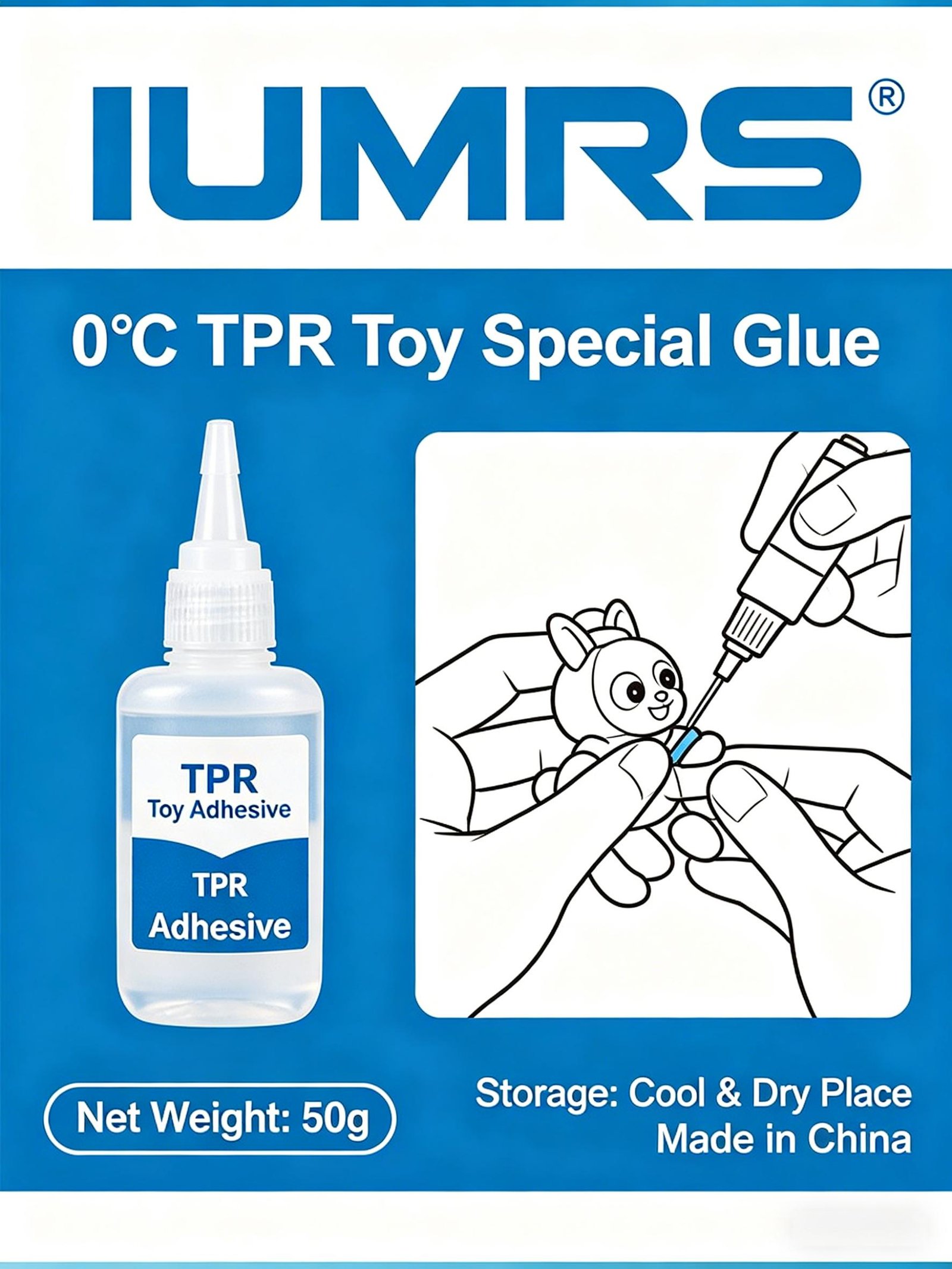
Introduction: A Sticky Problem for Soft Toy Manufacturers
In the world of soft toy manufacturing, few materials are as beloved—and as challenging to work with—as TPR (Thermoplastic Rubber). Its gel-like softness, elasticity, and skin-safe properties make it the ideal candidate for today’s most popular stress-relief products: 0° TPR squishy balls, “Nian Nian Qiu” (transparent sticky balls), and other soft, slow-rising decompression toys. But there’s a longstanding headache that has plagued factories, repair technicians, and DIY enthusiasts alike: how do you bond TPR to itself without compromising its signature softness or transparency?
Most conventional glues are too rigid, too brittle, or too opaque. They dry white and crusty, ruining the crystal-clear aesthetic of a high-end transparent TPR ball. Worse still, many industrial adhesives corrode the delicate surface of TPR, causing discoloration, shrinkage, or an unpleasant tacky residue.
Enter IUMRS 0° TPR Toy-Specific Glue—the game-changing, factory-ready, soft-type transparent adhesive engineered exclusively for ultra-soft (0 Shore A) TPR materials. This article will explore why this glue has become the gold standard for manufacturers of TPR stress balls, squishies, and soft捏捏乐 (pinch-pinch fun) toys.
Chapter 1: Understanding the Material – Why 0° TPR Needs a Special Glue
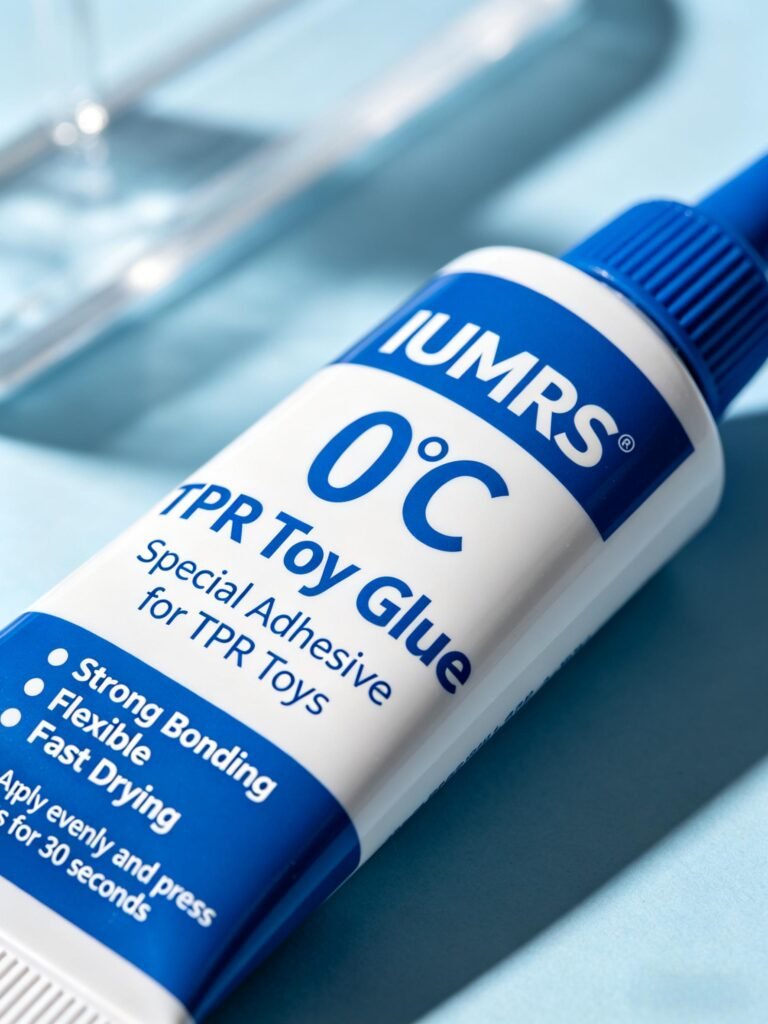
Before we dive into the glue itself, it’s important to understand the substrate. 0° TPR (often called “0 Shore A” TPR) is not your average plastic or rubber. It’s an extremely soft, low-hardness thermoplastic elastomer that feels almost jelly-like to the touch. Unlike harder TPR compounds used in shoe soles or tool handles, 0° TPR is designed purely for sensory play: it squishes, stretches, and slowly returns to its original shape.
However, this softness creates three bonding challenges:
- Surface energy mismatch – TPR is a low-surface-energy material, making it notoriously difficult for adhesives to wet and adhere.
- Plasticizer migration – Many soft TPR formulations contain plasticizers that can migrate into standard adhesives, causing bond failure within days.
- Flexibility mismatch – If the glue dries rigid or glassy, it will crack or peel the moment the toy is squeezed.
Traditional instant glues (cyanoacrylates) dry hard and often leave white blooms (frosting) on transparent surfaces. Epoxies are too stiff. Solvent-based glues evaporate, shrink, and frequently attack the TPR surface.
The IUMRS 0° TPR glue was formulated from the ground up to solve every single one of these problems. It is not a repurposed industrial adhesive—it is a dedicated, chemically matched bonding agent for ultra-soft TPR toys.
Chapter 2: Product Deep Dive – IUMRS 0° TPR Glue Specifications
Let’s look at the numbers and features that set this glue apart. Based on the official product specifications:
| Attribute | Detail |
|---|---|
| Brand | IUMRS |
| Certification | SGS (safe for toy manufacturing) |
| Country of Origin | China (Guangdong) |
| Chemical Type | Epoxy resin adhesive (modified for extreme flexibility) |
| Special Function | Direct bonding of 0° TPR without surface treatment |
| Effective Content | ≥65% |
| Cure Method | Room temperature cure |
| Color | Fully transparent |
| Viscosity | 1000 ± 500 mPa·s (self-leveling, non-drip) |
| Initial Set Time | 1-2 minutes |
| Full Cure Time | 48 hours |
| Temperature Range | -25°C to 80°C |
| Shelf Life | 12 months (store cool & dry or refrigerated) |
| Packaging | 1000ml (factory-scale container) |
Key performance advantages:
- ✅ No surface treatment required – Apply directly to TPR substrates.
- ✅ High-strength elastic bond – Remains soft and pliable after curing.
- ✅ 100% transparent – No whitening, no blooming, no visible glue lines.
- ✅ Non-corrosive – Will not cloud, melt, or stress-crack 0° TPR.
- ✅ High-tack initial grab – Sets in 1-2 minutes for assembly line efficiency.
Chapter 3: Why Factories Choose IUMRS – Real-World Benefits
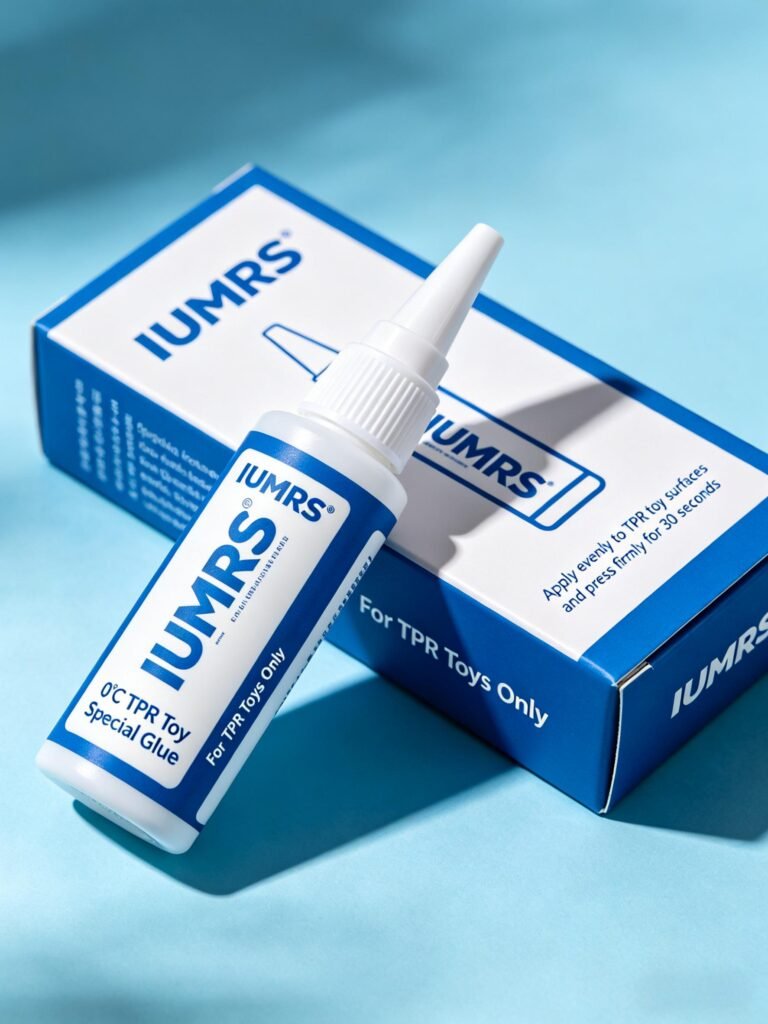
1. Eliminates Pretreatment, Saves Labor Costs
Most TPR adhesives require corona treatment, flame treatment, or expensive primers. Not this one. IUMRS 0° TPR glue has been molecularly engineered to wet out directly onto untreated TPR surfaces. For a factory producing thousands of squishy balls per day, eliminating the pretreatment step saves hours of labor and equipment costs.
2. Perfect for “Invisible” Repairs on Transparent Toys
Transparent squishy balls are all the rage—they look like liquid-filled orbs but are actually solid TPR. The worst enemy of a transparent toy is a visible repair line. This glue cures optically clear with no haze or bubbles. When bonding two halves of a TPR stress ball, the seam literally disappears. For high-end “Nian Nian Qiu” (sticky pinch toys) where clarity is a selling point, this is non-negotiable.
3. Remains Flexible Under Repeated Stress
A decompression ball may be squeezed hundreds of times per day. The glue line must flex as much as the surrounding material. Because IUMRS glue is a soft-type adhesive, it retains rubber-like elongation even after full cure (48 hours). No cracking, no delamination, no stiffness.
4. Wide Temperature Tolerance for Global Shipping
These toys are shipped worldwide, from freezing warehouses to hot shipping containers. The glue maintains its bond from -25°C to 80°C, meaning it won’t become brittle in winter or soften in summer.
5. Factory-Ready Packaging & Stability
The 1000ml container is designed for industrial dispensing systems (manual or automated). With a viscosity of 1000±500 mPa·s, it flows evenly but does not drip off vertical surfaces. The 12-month shelf life (or longer if refrigerated) allows bulk purchasing without waste.
Chapter 4: Application Guide – How to Use IUMRS 0° TPR Glue for Optimal Results
For factory production lines or small repair shops, follow these steps:
Step 1: Surface Preparation (Minimal)
While the glue does not require primers, surfaces should be clean. Remove dust, mold release agents, or oils with a mild detergent or isopropyl alcohol, then dry completely.
Step 2: Application
Apply a thin, even layer to one of the TPR surfaces. Because the glue has a 1-2 minute open time, you can position the parts without rushing. For injection-molded hollow balls, use a fine nozzle to apply glue along the seam edge.
Step 3: Joining & Fixing
Press the two TPR surfaces together. The initial tack will hold them in place. No clamping is necessary for small parts, though light pressure for 30 seconds improves initial bond.
Step 4: Curing
Allow 1-2 minutes for handling strength. Full mechanical and elastic properties develop after 48 hours at room temperature (20-25°C). If your factory environment is cold or humid, consider gentle warming (30-40°C) to accelerate curing.
Important: Do not immerse in water or expose to extreme humidity during the first 24 hours.
Chapter 5: Case Study – Transparent 0° TPR Squishy Ball Assembly
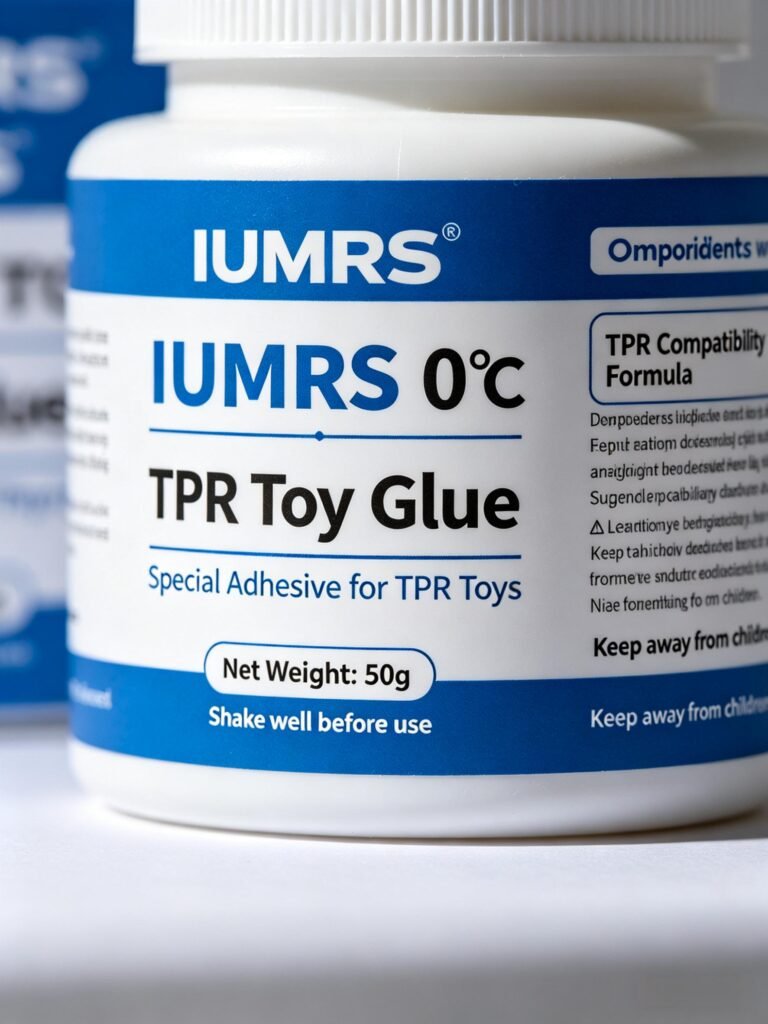
A Guangdong-based toy factory was struggling with a 15% rejection rate on their transparent squishy balls. They were using a generic super glue that caused:
- White halos around the seam (unacceptable for clear toys)
- Hard, sharp glue lines that customers complained about
- Brittle bonds failing after 200 squeezes
The IUMRS solution:
- Switched to IUMRS 0° TPR glue – no surface treatment.
- Applied via automatic dispensing robot (1000ml pressurized tank).
- 2-minute assembly line takt time: parts joined, then cured for 48 hours in racks.
Results after 1 month:
- Rejection rate dropped to 1.2% (mostly due to molding defects, not bonding)
- Zero “white seam” complaints from buyers
- Stress-test passed 10,000 compression cycles without bond failure
The factory owner noted: “It’s the first glue that lets us treat TPR like it’s one solid material. The seam is invisible, and the toys finally feel seamless to the touch.”
Chapter 6: Technical Q&A – Addressing Common Concerns
Q: Is this glue safe for children’s toys?
A: Yes. The glue has passed SGS certification, meaning it complies with international toy safety standards for heavy metals, phthalates, and general toxicity. Cured glue is inert and skin-safe.
Q: Can it bond TPR to other materials (e.g., plastic, metal, silicone)?
A: While optimized for TPR-to-TPR bonding, it also works on TPE and some plastics. For silicone, we do not recommend it—silicone requires specialized adhesives. For metal or rigid plastic inserts, test first.
Q: The glue smells during application – is that normal?
A: A mild epoxy odor is normal during curing. Ensure adequate ventilation in the factory. Once fully cured (48h), there is no residual smell.
Q: How do I clean uncured glue from dispensing equipment?
A: Use acetone or a dedicated epoxy solvent before the glue cures. Cured glue must be mechanically removed.
Q: What does “0 degree” refer to?
A: In TPR hardness terminology, 0 Shore A is the softest measurable grade. It feels nearly gel-like. This glue is specifically tuned for that extreme softness.
Chapter 7: Comparison – IUMRS vs. Common Alternatives
| Feature | IUMRS 0° TPR Glue | Standard Super Glue | Two-Part Rigid Epoxy |
|---|---|---|---|
| Transparency | 100% clear, no bloom | Often whites/blooms | Can yellow over time |
| Flexibility after cure | High, rubber-like | Near zero (brittle) | Very low |
| Bond strength on TPR | Excellent | Poor after flexing | Moderate |
| Surface treatment needed? | No | Often yes (primer) | Yes (abrasion) |
| Corrosion of TPR | None | Can craze surface | May cause plasticizer migration |
| Cost per unit | Moderate (bulk saves) | Low but high failure rate | High & slow-curing |
Verdict: For soft TPR toys where transparency and repeated flexing are critical, IUMRS is the clear winner.