
 By fuyuhuaxue@iumrs.com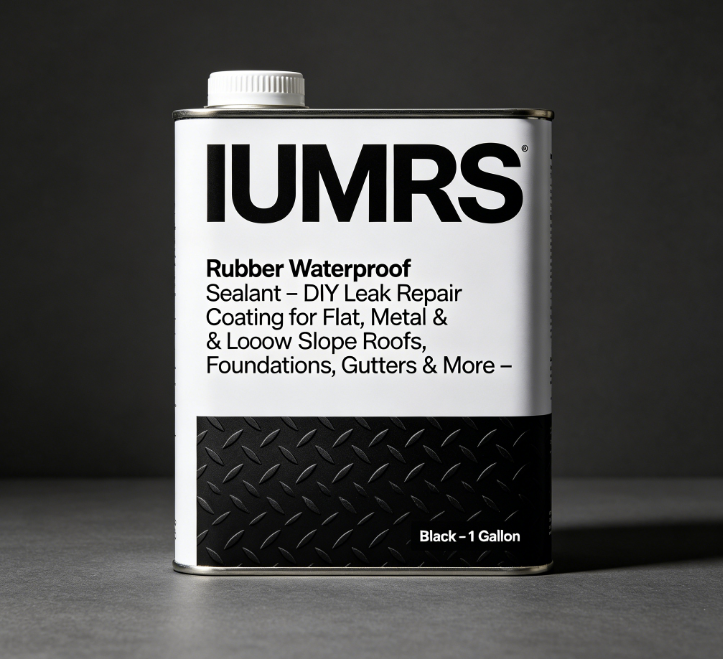
There is a specific kind of dread that comes with a roof leak. It doesn’t announce itself with a dramatic crash. It arrives as a slow, dark bloom on your ceiling—a damp coin that grows into a stain, then a drip, then a puddle on your floor. You grab a bucket. You call a roofer. You wait. And then you see the estimate.
For many homeowners, the next step is a trip to the hardware store for a bucket of traditional roof tar. You know the one. It smells like a chemical plant exploded. It’s sticky enough to ruin your clothes, your shoes, and your dog’s paws. You smear it on, hope for the best, and three months later—when the temperature drops or the sun bakes it—the crack returns. Water finds its way back in.
But what if there was a better way? What if you could paint on a rubber roof that moves with your house, bonds to almost anything, lasts for years, and doesn’t require a gas mask to apply?
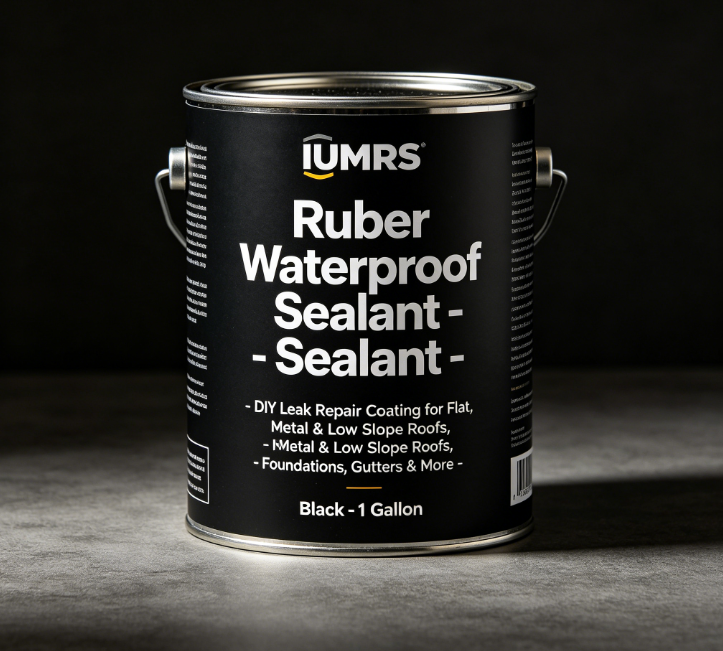
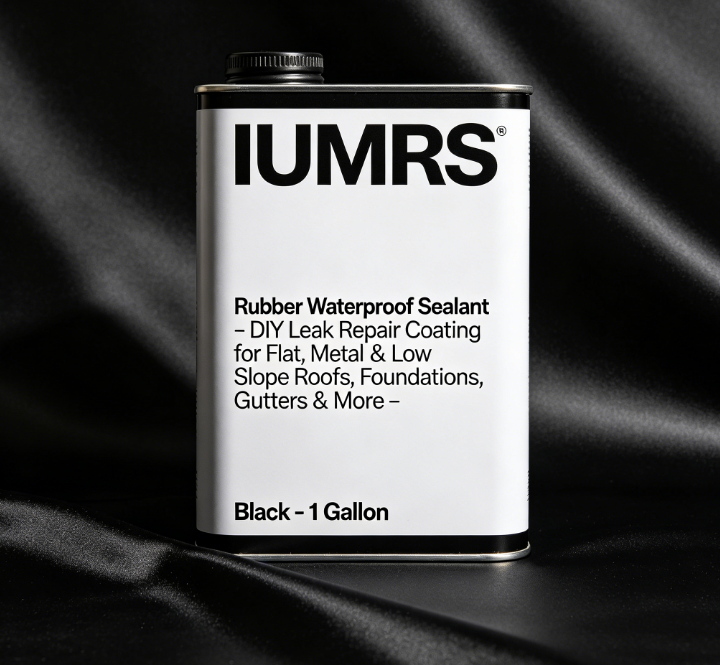
Meet Liquid Rubber Waterproof Sealant – the 1-gallon, water-based, industrial-strength bitumen formula that is quietly revolutionizing the way we fix flat roofs, metal roofs, foundations, gutters, and everything else that leaks.
This is not a patch. This is not a bandage. This is a seamless, flexible, protective membrane that turns problem areas into waterproof fortresses.
Part One: Why Traditional Roof Tar Belongs in the Past
Let’s be honest about the old guard. Roof tar and asphalt patch products have been around for a century because they’re cheap and they work—sort of. For a few weeks.
The problems with traditional tar are baked into its chemistry:
- It’s brittle. When your house expands in the summer heat and contracts in the winter freeze, rigid tar cracks. Water finds those cracks like a detective finding clues.
- It smells terrible. Solvent-based products release volatile organic compounds (VOCs) that are bad for you, your family, and the environment.
- It’s messy. Once tar touches your hands, your tools, or your siding, it never leaves.
- It fails at movement. Roofs move. Wind shakes them. People walk on them. Tar doesn’t stretch—it snaps.
Liquid Rubber was engineered to solve every single one of these problems.
Part Two: The Science of Seamless Waterproofing
The magic of Liquid Rubber lies in its industrial-strength bitumen formula. Bitumen has been used for waterproofing for thousands of years—the ancient Egyptians used it on the Nile. But Liquid Rubber has modernized it into a liquid that cures into a seamless, monolithic rubber membrane.
When you pour or brush this black liquid onto a flat roof, it doesn’t just sit on top. It flows into every tiny pit, every hairline crack, every seam around a vent pipe or skylight. As it dries, it cures into a continuous rubber sheet—no seams, no joints, no weak points.
This is the key difference: A traditional patch is a cover-up. Liquid Rubber is a new skin for your roof.
The 950% Elongation Factor
Let’s talk numbers. Most roof coatings can stretch a little—maybe 50% to 100%. Liquid Rubber offers over 950% elongation.
What does that mean in plain English? Imagine a rubber band. A cheap one snaps if you pull it too hard. A Liquid Rubber membrane can stretch nearly ten times its original length and still snap back into place without tearing or losing adhesion.
Why does this matter for your roof? Because buildings move. Temperature changes cause metal to expand and contract. Wind uplift stresses flat roofs. Foundation settling pulls at the edges. With 950% elongation, Liquid Rubber moves with your building instead of fighting against it. No cracking. No peeling. No recurring leaks.
Part Three: Where Can You Use It? (The Long List)
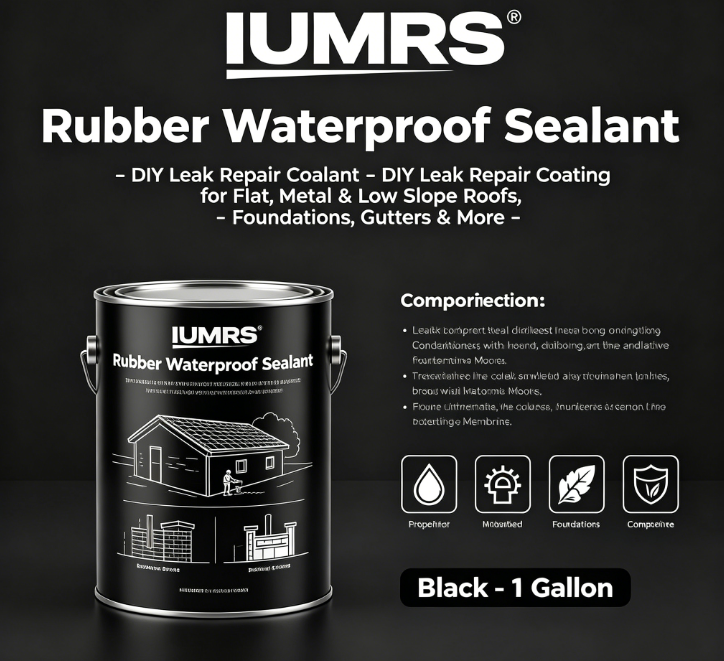
Liquid Rubber is not a one-trick pony. It is a multi-surface, multi-location problem solver. Here is where this black, flexible membrane shines brightest.
1. Flat & Low Slope Roofs
These are the hardest roofs to keep dry. Water doesn’t run off—it sits. It pools. It finds every pinhole. Liquid Rubber is specifically formulated for standing water surfaces. With proper application (3-4 heavy coats to achieve a 60-80 mil membrane), it creates a pond-proof barrier that laughs at rainstorms.
2. Metal Roofs
Metal roofs are durable, but they leak at the seams. Screws back out. Flashing pulls up. Roll or brush Liquid Rubber over the entire panel or just the problem joints. It bonds to metal like a magnet and stops the rust in its tracks.
3. Foundations & Basement Walls
Water doesn’t just come from above—it comes from the ground. Hydrostatic pressure pushes moisture through concrete foundation walls. Liquid Rubber brushes onto vertical surfaces easily. One gallon covers 30 square feet on foundations (2-3 heavy coats for a 30 mil membrane). It blocks water infiltration where other sealants fail.
4. Gutters & Downspouts
Gutters rust from the inside out. Pinhole leaks turn into streaks on your siding. Instead of replacing the whole gutter, paint Liquid Rubber along the interior channel. It seals the holes and adds years of life.
5. Planter Boxes & Concrete Surfaces
Yes, you can use this on the ground. Concrete planters, retaining walls, even koi pond edges—Liquid Rubber waterproofs them all. Just remember: it can remain slightly tacky after curing, so it is NOT suitable for walking surfaces like patios, decks, or walkways. Keep it for vertical or low-traffic horizontal areas.
Part Four: The Water-Based Revolution
One of the most unexpected features of Liquid Rubber is what it doesn’t have: harsh solvents.
Traditional roof tar is solvent-based. That means it off-gasses volatile organic compounds (VOCs) into the air. You can smell a tar roof from three blocks away. Apply it in a basement or a crawlspace, and you’ll be dizzy in minutes.
Liquid Rubber uses an advanced water-based formula. It contains no VOCs and no harmful odors. You can use it indoors—in a basement, a bathroom, or a crawlspace—without evacuating your family or wearing a respirator.
Furthermore, water-based means it won’t damage foam insulation or sensitive materials. Many solvent-based products eat through spray foam like acid. Liquid Rubber sits on top of it gently, curing into a protective layer without dissolving the insulation beneath.
Cleanup is also a breeze. Soap and water wash away wet Liquid Rubber. No need for mineral spirits or chemical thinners. Your brushes, rollers, and hands stay safe.
Part Five: How to Build a Professional Waterproofing System
Liquid Rubber is powerful on its own, but for maximum protection—especially on problem areas like roof seams, flashing, vents, and skylights—the manufacturer recommends an engineered waterproofing system.
Here is the pro-level approach:
Step 1: Surface Preparation
Clean the surface. Remove loose debris, dirt, grease, and old peeling coatings. The surface must be sound. If it’s dusty, Liquid Rubber has nothing to grab.
Step 2: Apply the First Coat
Brush, roll, or spray on a generous coat of Liquid Rubber. Work it into cracks and seams.
Step 3: Embed Seam Tape or Geo-Textile (For High-Movement Areas)
For joints, seams, vents, skylights, and any protrusion where movement may occur, press Liquid Rubber Seam Tape or Geo-Textile fabric into the wet coating. Then apply another coat over the top. This creates a reinforced, tear-resistant bridge that can handle building movement for decades.
Step 4: Apply Additional Coats
For flat roofs and standing water surfaces, apply 3-4 heavy coats to achieve a 60-80 mil membrane thickness. For vertical surfaces like foundations, 2-3 heavy coats (30 mil) is usually sufficient.
Coverage at a glance:
- Flat/low slope roofs & standing water: 1 gallon covers 15 sq ft (3-4 heavy coats)
- Vertical surfaces (foundations, walls): 1 gallon covers 30 sq ft (2-3 heavy coats)
Part Six: Used by Professionals, Loved by DIYers
With millions of gallons sold, Liquid Rubber has earned a reputation that spans both sides of the contractor-client divide.
Professionals love it because it works. Property managers use it to extend the life of aging roofs without the cost of replacement. Contractors keep a gallon on the truck for emergency repairs and preventative maintenance. It outperforms traditional roof tar on every metric: adhesion, flexibility, durability, and UV resistance.
DIYers love it because it’s forgiving. You don’t need a license or a decade of experience. Clean the surface, stir the can, brush it on, let it dry, repeat. The water-based formula means you won’t hurt yourself or your lungs. And the results? Professional-grade.
Whether you’re a first-time homeowner patching a garage roof or a seasoned contractor waterproofing a commercial foundation, Liquid Rubber delivers the same high-performance result.
Part Seven: Premium Adhesion Technology
Why does Liquid Rubber stick so well? Premium adhesion technology.
This sealant bonds to more building materials than most competitors:
- Metal (steel, aluminum, galvanized)
- Concrete (poured, block, or precast)
- Wood (plywood, OSB, dimensional lumber)
- EPDM rubber
- Modified bitumen
- Built-up roofing (BUR)
- PVC
- And more
However, honesty requires a caveat: Liquid Rubber can remain tacky after curing. It never fully hardens to a rock-solid, dry-to-the-touch finish like paint. This is by design—the tackiness contributes to its flexibility and self-sealing properties. But it does mean:
NOT suitable for walking surfaces. Do not apply to walkways, patios, decks, or any area where people will walk barefoot or with shoes. Use it for waterproofing applications where foot traffic is minimal or not needed—roofs (except maintenance paths), foundation exteriors, gutters, planter boxes, and vertical walls.
Part Eight: UV Resistance & Long-Term Durability
One of the silent killers of roof coatings is the sun. Ultraviolet radiation breaks down carbon bonds. Cheap sealants turn chalky, then crumbly, then useless.
Liquid Rubber is formulated to resist UV damage. While no coating lasts forever under direct, intense sunlight, this sealant holds up remarkably well for years. It doesn’t crack, peel, or turn to dust. For extra UV protection on roofs, some users apply a topcoat of Liquid Rubber’s white reflective coating, but the black formula alone provides substantial resistance.
Part Nine: The Gallon-Sized Sweet Spot
Why one gallon? Because most serious leak problems require serious coverage—but not so much that you’re left with a half-empty bucket hardening in your garage.
One gallon of Liquid Rubber gives you enough material to:
- Resurface a small flat roof (e.g., a shed, porch, or dormer)
- Seal an entire foundation wall
- Waterproof a planter box and a gutter system
- Perform preventative maintenance on roof seams, vents, and skylights
It’s the Goldilocks quantity for homeowners and the perfect job-size for contractors who need to move between sites.
Part Ten: Real-World Success Stories
The Florida Flat Roof: A homeowner in Tampa had a 20-year-old flat roof over a sunroom that leaked every time a hurricane brushed the coast. Roofers quoted $8,000 for replacement. He bought two gallons of Liquid Rubber, a roll of seam tape, and spent a weekend applying the system. Three hurricane seasons later: zero leaks.
The Michigan Basement: A family in Detroit had water seeping through a hairline crack in the poured concrete foundation every spring thaw. They cleaned the crack, brushed on Liquid Rubber, and applied three coats. The basement stayed dry for five years and counting.
The Seattle Gutter: Persistent dripping from a metal gutter seam drove a homeowner crazy. A single application of Liquid Rubber along the interior seam stopped the drip instantly. Two years later, still dry.
The Verdict: Stop Patching. Start Waterproofing.
You have a choice every time a leak appears. You can buy cheap tar, breathe the fumes, smear on a brittle patch, and wait for it to fail. Or you can invest in Liquid Rubber Waterproof Sealant – the industrial-strength, water-based, ultra-flexible membrane that moves with your building and lasts for years.
It works on flat roofs, metal roofs, low slope roofs, foundations, gutters, concrete, planter boxes, and more. It delivers superior adhesion, 950% elongation, UV resistance, and zero VOCs. Professionals trust it. DIYers master it.
Don’t let another rainstorm ruin your ceiling, your basement, or your peace of mind. Grab a gallon of Liquid Rubber, a brush, and a weekend. Build the seamless, flexible, waterproof future your home deserves.
One roof. One foundation. One solution. Liquid Rubber.